


My Dryer Is Spinning but Not Heating: Troubleshooting Steps Before You Call for Repair
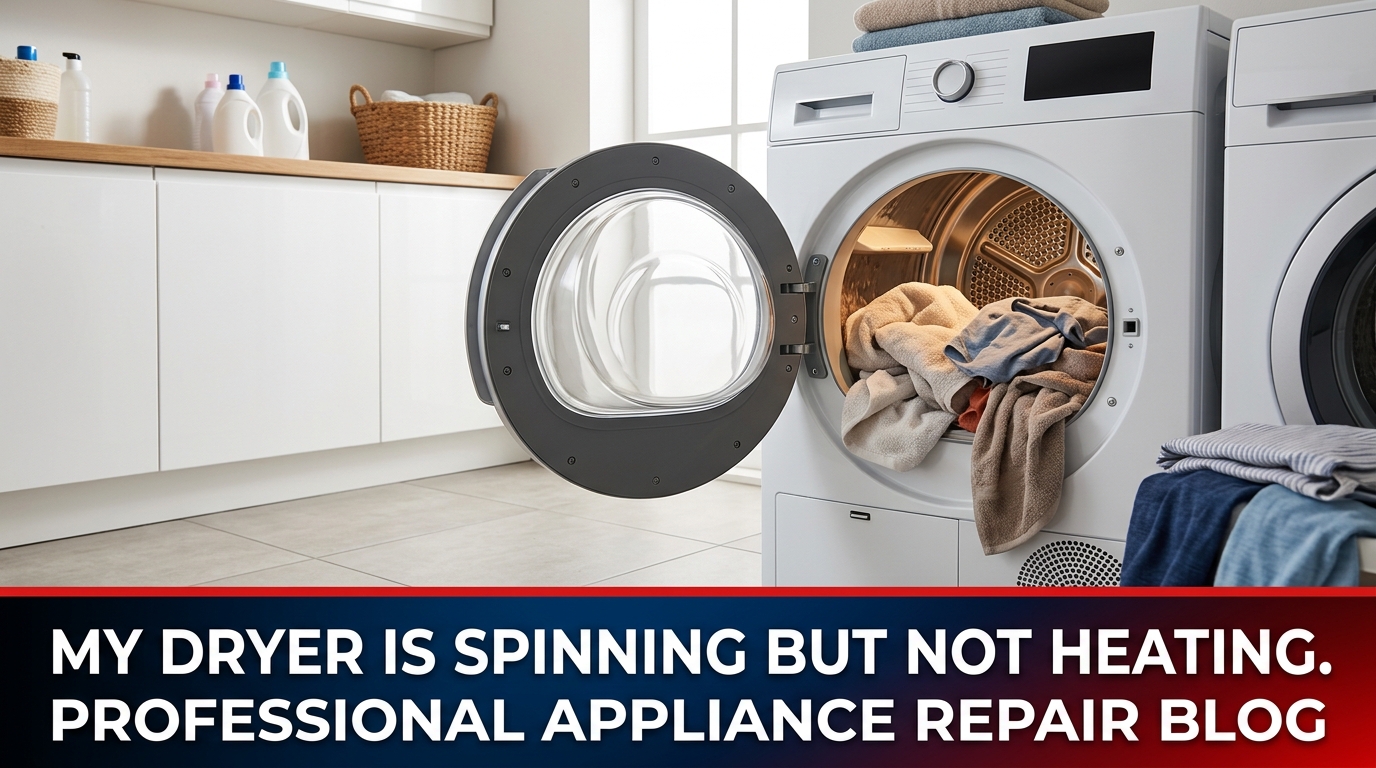
The drum is turning. The timer is counting down. But when you open the door, the clothes are still soaking wet and cold. A dryer that spins but produces no heat is one of the most frustrating appliance failures in any home, especially in a Montreal winter.
The good news: the fact that the motor is running and the drum is spinning means a large portion of the dryer is still functional. The heat system is separate, and it has a predictable set of failure points. Work through these five steps in order before calling a technician. You may solve it yourself. If not, you will have the information the technician needs to fix it faster.
In this article
Red flag
Never bypass or bridge a thermal fuse. It is a fire safety component. If the fuse keeps blowing after replacement, the dryer has an unresolved overheating cause that needs professional diagnosis before you risk a dryer fire.
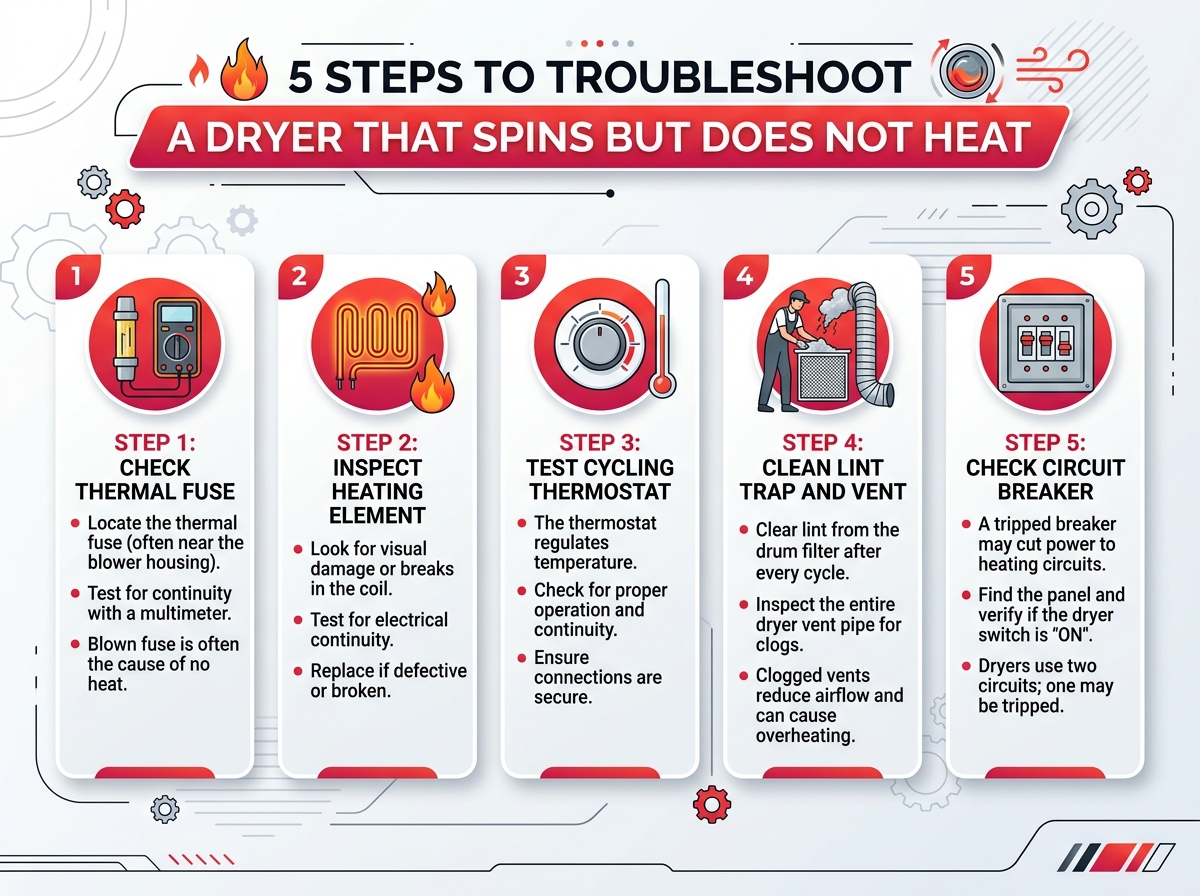
5-step troubleshooting flowchart for a dryer with no heat
Step 1: Check the circuit breaker
Electric dryers run on a 240-volt circuit, which actually consists of two separate 120-volt legs. When one leg trips, the motor keeps running (it only needs one leg) but the heating element loses power entirely. The result is exactly what you are seeing: a dryer that spins without heat.
Go to your electrical panel and look for the dryer breaker. On most Canadian panels, a 240-volt circuit uses a double-pole breaker. If only one side has tripped, it may look partially on but it is actually in a fault state. Flip the breaker fully off, then back on. If it trips again immediately, you have an electrical fault that requires an electrician. If it stays on, try the dryer again. This solves the problem more often than most people expect.
Step 2: Test the thermal fuse
The thermal fuse is a one-time safety device that cuts power to the heating element when the dryer overheats. Once it blows, it does not reset. The dryer motor continues to run, but the heat circuit stays open until the fuse is replaced.
The thermal fuse is typically located on the exhaust duct near the heating element housing at the back of the machine. Testing requires a multimeter set to continuity mode. Disconnect the dryer from power, access the fuse, and test it. A blown fuse shows no continuity. Replacement fuses cost $5 to $25 depending on the model, making this one of the most cost-effective dryer repairs possible. The bigger issue is always why the dryer overheated in the first place, which usually leads back to Step 5.
Step 3: Inspect the heating element
The heating element is a coiled resistance wire that generates heat when current flows through it. Over time, the coil can develop a break, cutting the heat circuit. The motor and drum continue running normally because they are on a separate circuit.
Accessing the heating element requires removing the back panel of most dryer models. Once exposed, inspect it visually for a visible break in the coil. Test it with a multimeter for continuity. No continuity means the element has failed. Replacement heating elements cost $20 to $80 for the part; labour adds $80 to $150 in most Montreal quotes. Total repair cost: $100 to $230. For a dryer under 8 years old, this is almost always worth the repair.
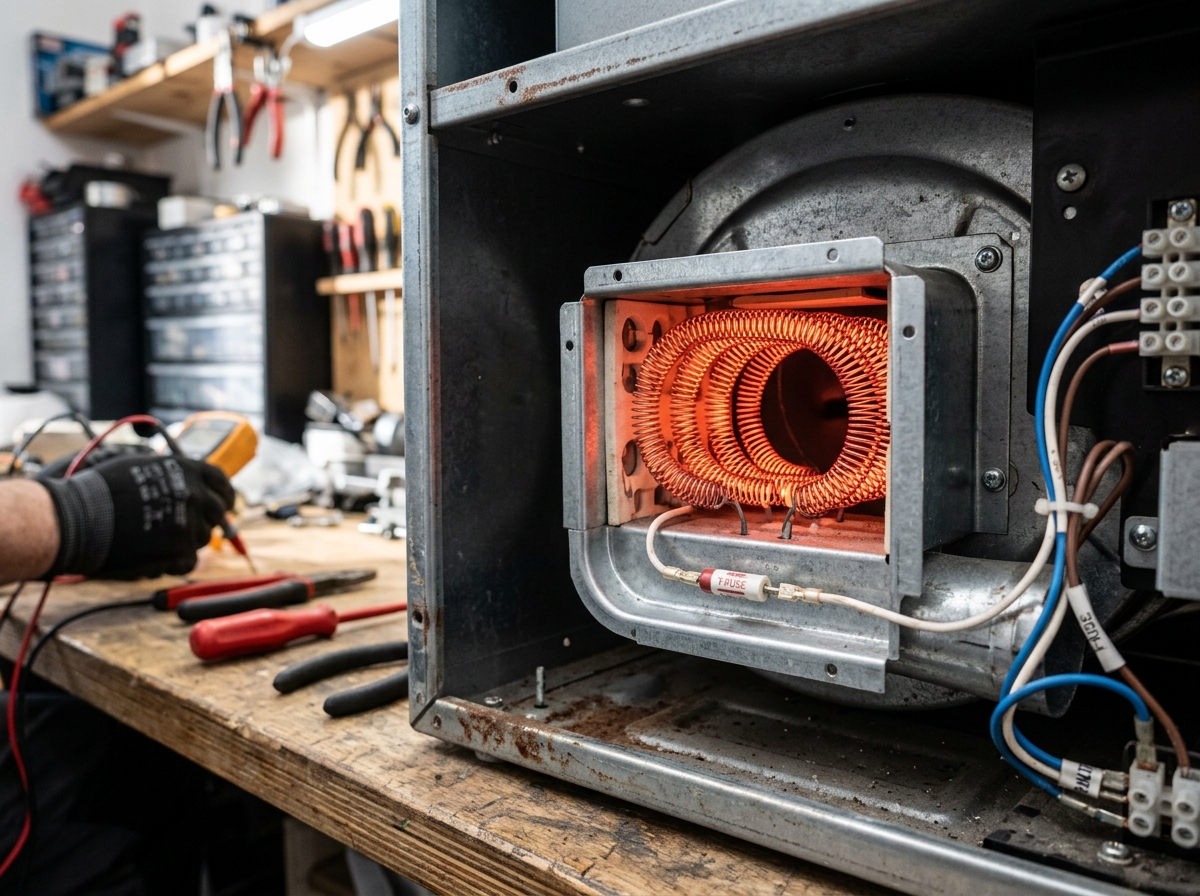 The heating element and thermal fuse are both accessible from the back panel
Step 4: Test the cycling thermostat
The cycling thermostat regulates the temperature inside the drum by cycling the heating element on and off during the drying cycle. A failed cycling thermostat can cause the dryer to either overheat (leading to a blown thermal fuse) or produce no heat at all if it stays in the open position permanently.
Cycling thermostats are usually located near the heating element or on the exhaust duct. Test with a multimeter for continuity at room temperature. A functioning thermostat should show continuity when cold. If it reads open circuit when cold, it has failed. Replacement cost is typically $15 to $40 for the part. It is often worth replacing both the cycling thermostat and the thermal fuse at the same time if either has failed, since one failure often contributes to the other.
Step 5: Check vent and airflow restriction
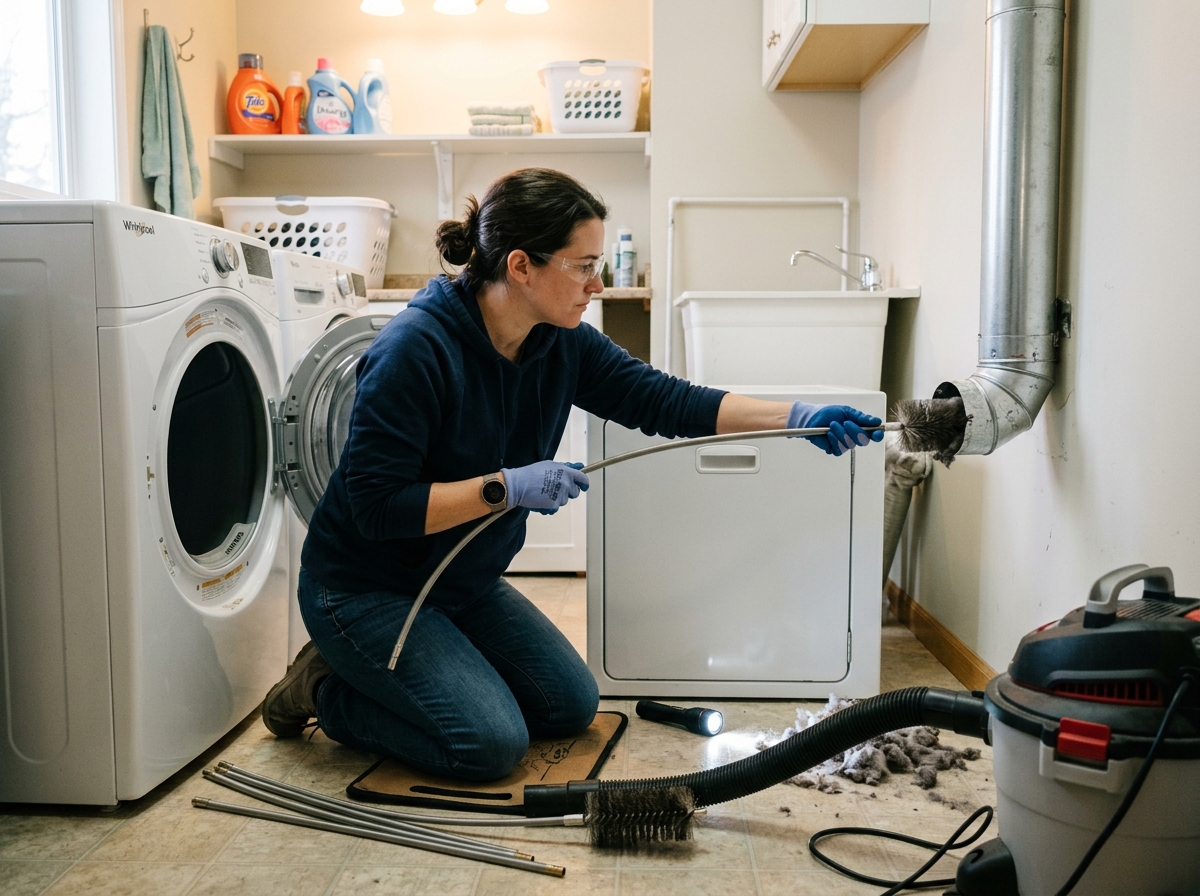
A blocked or restricted vent is the root cause of most dryer overheating events in Canadian homes. When airflow is restricted, heat builds up inside the drum. The thermal fuse blows to prevent a fire. The dryer stops producing heat. You clear the fuse, and the problem returns in weeks.
Disconnect the vent hose from the back of the dryer and run a drying cycle. If the dryer now produces heat with no vent connected, the problem is definitely a blocked vent. Check the duct from back of dryer all the way to the exterior wall cap. Lint buildup at bends, crushed flex duct, and blocked exterior caps are the most common causes. The NFPA reports that failure to clean dryer vents is the leading cause of dryer fires in North America. Clean the full duct at least once per year.
Gas vs. electric dryers: different failure points
If you have a gas dryer, the troubleshooting steps differ. Gas dryers use an igniter and a gas valve coil assembly instead of an electric heating element. The thermal fuse and cycling thermostat still apply, but the igniter and gas valve coils are gas-specific failure points.
Signs of a gas igniter failure: the drum spins, you can hear the igniter click, but no flame lights. Signs of gas valve coil failure: the drum spins, you may see a brief flash of flame, then it goes out. Gas dryer repairs involving the gas system should be done by a certified technician. Do not attempt to service gas components unless you are qualified.
Repair cost guide for dryers in Montreal (2026)
| Component | Part cost (CAD) | Total repair estimate |
|---|---|---|
| Thermal fuse | $5 to $25 | $80 to $150 |
| Heating element | $20 to $80 | $100 to $230 |
| Cycling thermostat | $15 to $40 | $80 to $150 |
| Hi-limit thermostat | $10 to $35 | $80 to $150 |
| Gas igniter (gas dryers) | $20 to $60 | $100 to $200 |
| Gas valve coils (gas dryers) | $30 to $70 | $120 to $220 |
| Vent cleaning (professional) | N/A | $80 to $150 |
When to call a technician instead of DIYing
If you have worked through steps 1 to 5 and the dryer still has no heat, or if you are not comfortable accessing internal components, it is time to call a technician. The same is true if you have a gas dryer with a suspected gas system fault, if the circuit breaker keeps tripping after reset, or if you find any burned wiring during your inspection.
Providing your technician with what you have already checked saves diagnostic time and money. Tell them: breaker was reset and held, no heat after vent disconnected, thermal fuse tested OK. That narrows the field considerably and often saves $50 to $100 in diagnostic time.
Pro tip
Clean your dryer lint trap after every load and professionally clean the full vent duct from machine to exterior wall cap at least once per year. In Montreal homes with long duct runs to exterior walls, twice per year is safer. Most dryer fires are 100 percent preventable with this one habit.
Disclaimer
This article is for general guidance only. Appliance repair costs, safety recommendations, and best practices may change. Capital Appliance Repair Montreal is not liable for outcomes from actions taken based on this content. Always confirm with a licensed technician for your specific appliance and situation.
Frequently Asked Questions
Appliance repair across Greater Montreal
Capital Appliance Repair Montreal serves homeowners across the Greater Montreal region, including Laval, Longueuil, Brossard, Terrebonne, Repentigny, Blainville, and many more cities and suburbs. Same-day and next-day appointments are available.
Ready to fix your appliance?
Fast, affordable repairs throughout Montreal and suburbs.
Book a repair now


