



Why Is My Fridge Not Cold Enough? 7 Common Causes for Montreal Homes
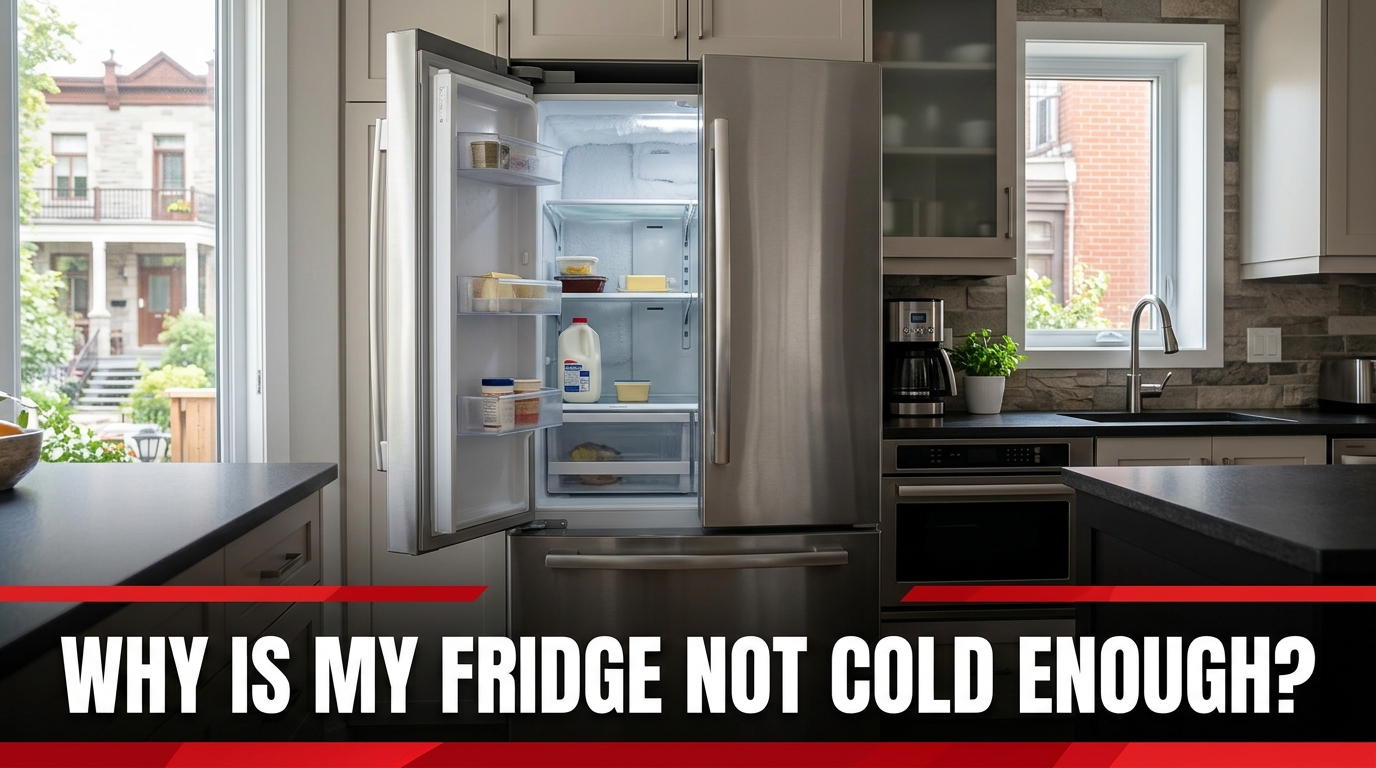
Your food is going off faster than it should. The fridge is running but the temperature inside feels wrong. A fridge that is not cold enough is one of the most common appliance complaints we see in Montreal homes, and the good news is that most causes have a clear explanation.
Before calling a technician, it is worth checking a few things yourself. Some causes are simple homeowner fixes. Others need a professional. This guide walks through all seven, in order of how likely they are to be the culprit in a typical Montreal home.
In this article
2. Worn or damaged door gasket
4. Failing evaporator fan motor
6. Temperature control thermostat issue
7. Low refrigerant (call a technician)
Did you know?
In Montreal, condenser coil buildup is worse during winter because houses run with windows closed and pet hair circulates more. Cleaning once before winter and once in spring is the most effective schedule.
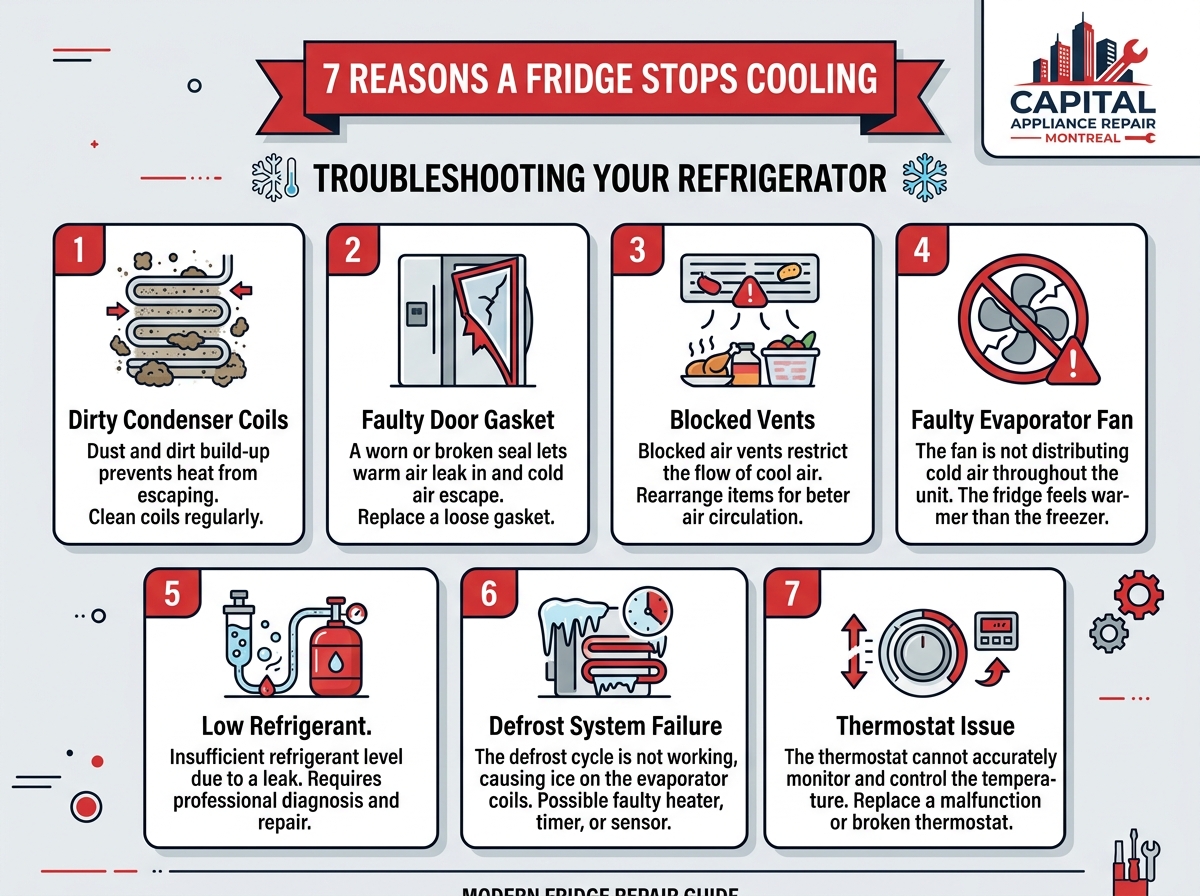
The 7 most common reasons your fridge is not cold enough
1. Dirty condenser coils
Condenser coils release heat from the refrigerant. When they are coated in dust and pet hair, they cannot do that job efficiently. The compressor works harder, the fridge runs warmer, and your electricity bill creeps up. For most Montreal households, cleaning the coils once or twice a year is enough to prevent this entirely.
The coils are typically located at the back of the unit or underneath it behind a kick plate. Unplug the fridge, pull it away from the wall, and use a vacuum brush attachment to remove the buildup. Five minutes of work can restore normal cooling performance.
2. Worn or damaged door gasket
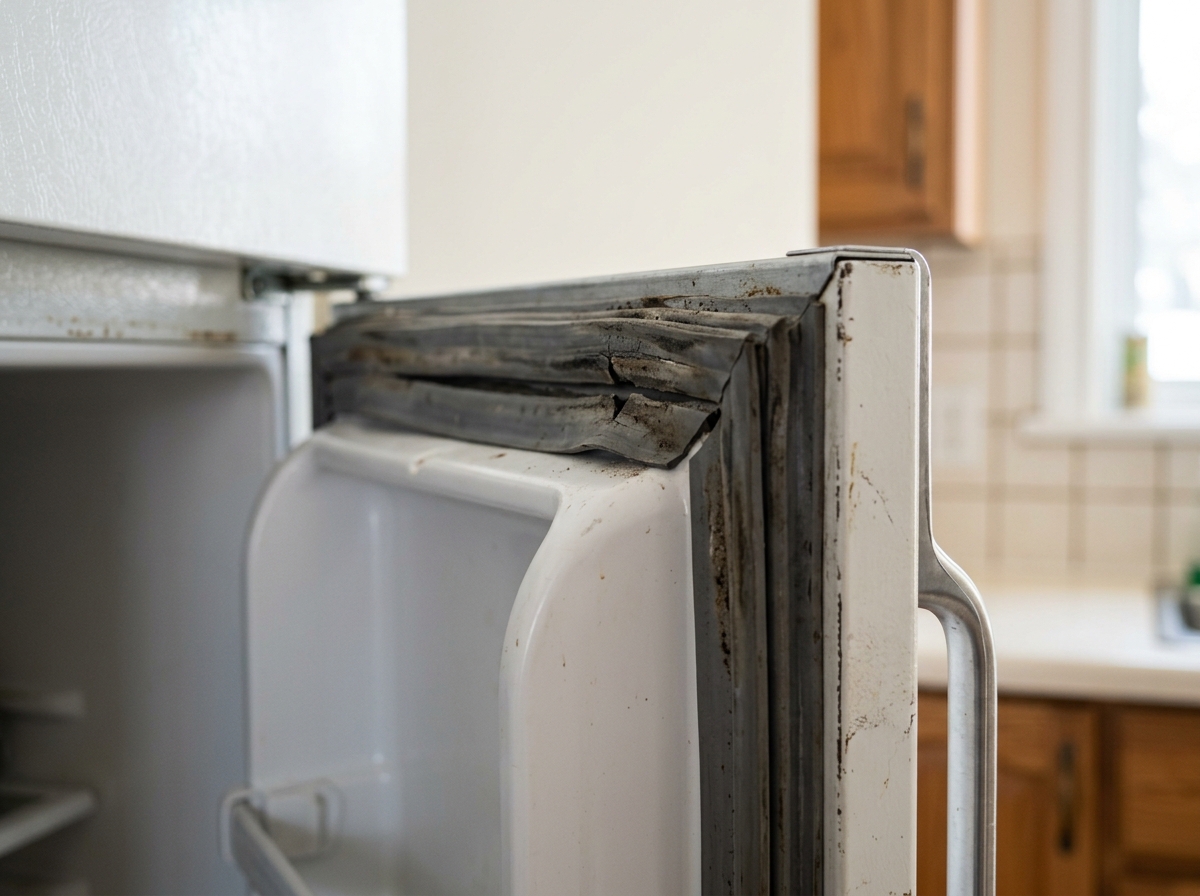
The rubber gasket around the fridge door creates an airtight seal. When it cracks, warps, or loses its grip, warm air enters constantly. The fridge compensates by running longer cycles, but it can never quite reach the set temperature.
Test it yourself: close the door on a piece of paper and try to pull it out. If the paper slides out with no resistance, the seal is failing. You can often see the warped sections visually. Replacement gaskets are available for most models and can be installed without a technician if you are comfortable with basic appliance work.
Pro tip
Set your fridge to 3 degrees Celsius and your freezer to -18 degrees Celsius. These are the Health Canada recommended safe food storage temperatures. A cheap appliance thermometer confirms you are actually hitting those numbers.
3. Blocked interior vents
Most fridges have vents on the back interior wall that circulate cold air from the freezer compartment into the fridge section. If food items are pushed against those vents, airflow stops. The freezer may still work fine while the fridge area warms up.
Check the rear wall of your fridge interior. Move anything touching or blocking the vent openings. Give it 24 hours after clearing them to see if the temperature drops. This is one of the most overlooked causes and one of the easiest to fix.
4. Failing evaporator fan motor
The evaporator fan pulls air across the cooling coils and distributes it through both compartments. When the motor starts to fail, airflow drops and the fridge section warms up even though the freezer still feels cold. You may hear an unusual humming or grinding noise, or no fan noise at all when you open the freezer door.
A simple test: open the freezer door and manually hold the door switch down so the fridge thinks the door is closed. You should hear the fan running. If you hear nothing, the fan motor may need replacement. This is a technician job on most modern units because it requires accessing the evaporator housing.
5. Defrost system failure
Frost-free fridges use a defrost heater, defrost thermostat, and defrost timer to prevent ice buildup on the evaporator coils. When any part of this system fails, ice gradually covers the coils. Eventually, the ice blocks airflow entirely and the fridge stops cooling.
Signs of defrost system failure: frost visible on the back wall of the freezer, ice building up around the evaporator cover, or condensation dripping inside the fridge. You can do a manual defrost by unplugging the fridge for 24 to 48 hours with the doors open, but the underlying defrost component still needs replacement.

Adjusting the temperature dial is a quick diagnostic step
6. Temperature control thermostat issue
The temperature control thermostat monitors the fridge temperature and tells the compressor when to cycle on and off. A faulty thermostat sends incorrect readings and may never trigger the compressor at all, even when the fridge is warm.
To test it roughly: turn the thermostat from its current setting to the coldest setting and listen for a click. If you hear the click and the compressor starts, the thermostat may still be functional but may be miscalibrated. No click suggests the thermostat has failed. Replacement cost for a thermostat is typically $80 to $180 CAD in parts and labour, depending on the model.
7. Low refrigerant (call a technician)
Refrigerant is the substance that actually transfers heat out of the fridge. It runs in a closed loop and should never need topping up under normal conditions. If the refrigerant level is low, it means there is a leak somewhere in the sealed system.
There is no homeowner fix for a refrigerant leak. Refrigerant handling is regulated in Canada and needs a trained technician with the right equipment. Signs include warm fridge despite compressor running, oily residue near refrigerant lines, or a hissing sound. Call a licensed technician. On older units, the repair cost may approach or exceed the value of the appliance.
Repair cost guide for Montreal (2026)
Here is a realistic range for the most common fridge repairs in Montreal. Costs vary by brand, model, and technician.
| Issue | Typical repair cost (CAD) | DIY possible? |
|---|---|---|
| Coil cleaning | $0 to $80 | Yes |
| Door gasket replacement | $80 to $200 | Sometimes |
| Evaporator fan motor | $150 to $350 | No |
| Defrost system component | $150 to $300 | No |
| Thermostat replacement | $80 to $180 | No |
| Refrigerant recharge + leak repair | $300 to $700 | No |
Red flag
If your fridge is more than 15 years old and the repair cost exceeds $400 to $500, replacing the unit is almost certainly the better financial decision. Modern ENERGY STAR fridges use 40 to 50 percent less electricity than units from the early 2010s.
Disclaimer
This article is for general guidance only. Appliance repair costs, safety recommendations, and best practices may change. Capital Appliance Repair Montreal is not liable for outcomes from actions taken based on this content. Always confirm with a licensed technician for your specific appliance and situation.
Frequently Asked Questions
Ready to fix your appliance?
Fast, affordable repairs throughout Montreal and suburbs.
Book a repair now


