


Why Your Samsung Washer Is Leaking and What to Do About It
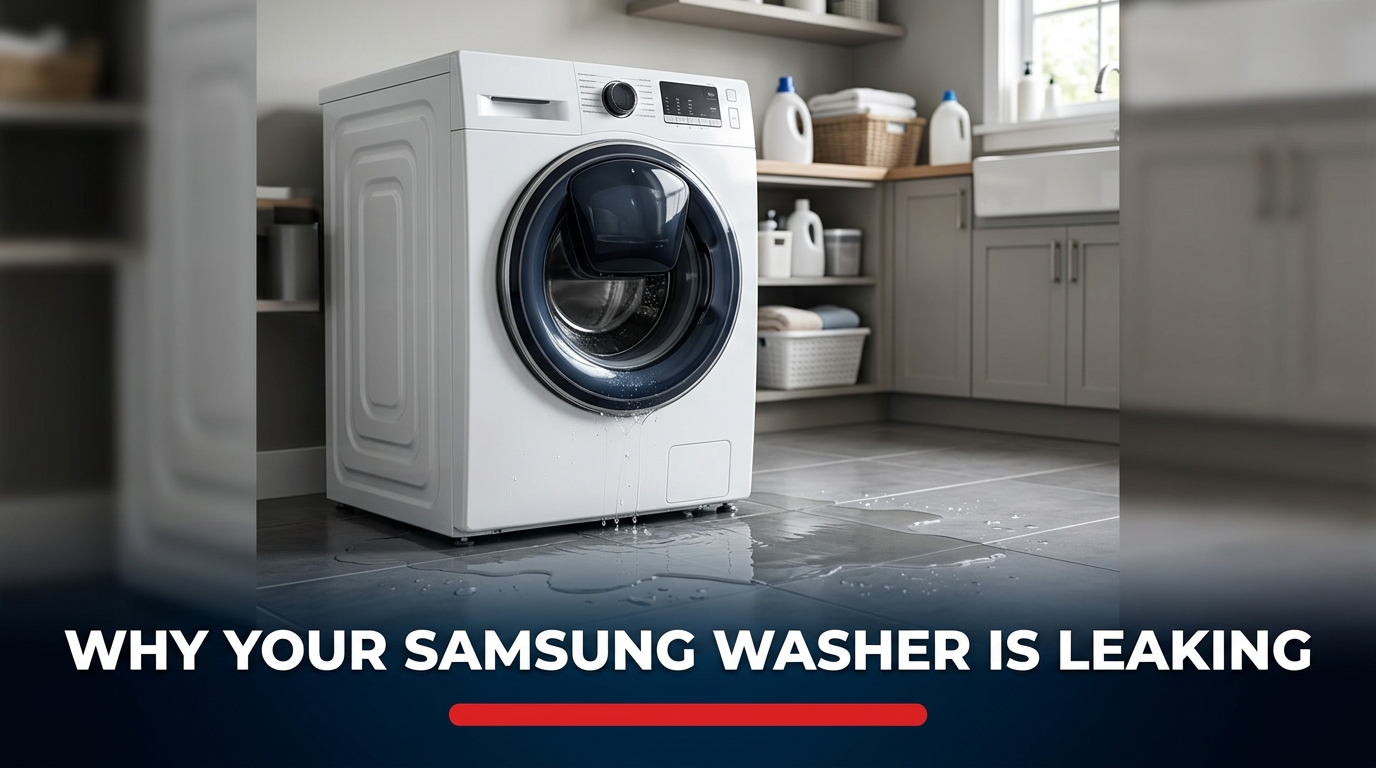
You walked into the laundry room and there it was: water on the floor around your Samsung washer. The machine ran its cycle, finished, and left a puddle. It might be a trickle during the wash, or a full leak when the door opens. Either way, a leaking washing machine needs attention before it causes floor damage, mould, or electrical hazards.
This guide covers the six most common reasons a Samsung front-load or top-load washer leaks, what you can check yourself, and what requires a technician. Costs are specific to the Montreal market.
In this article
- Cause 1: Damaged door boot gasket
- Cause 2: Loose or cracked inlet and drain hoses
- Cause 3: Faulty water inlet valve
- Cause 4: Drain pump leak
- Cause 5: Overloading and excess detergent
- Cause 6: Detergent drawer overflow
- How to identify where the leak is coming from
- Repair cost guide for Montreal
- FAQ
- Service areas
People often ask
People ask us all the time: can a leaking washer be used short-term? Our answer: if it is a small drip from a hose fitting, one more cycle to finish a load is usually not catastrophic. But if the leak is from under the machine or the door, stop immediately. Water under an appliance reaches the motor and control board faster than most people expect.
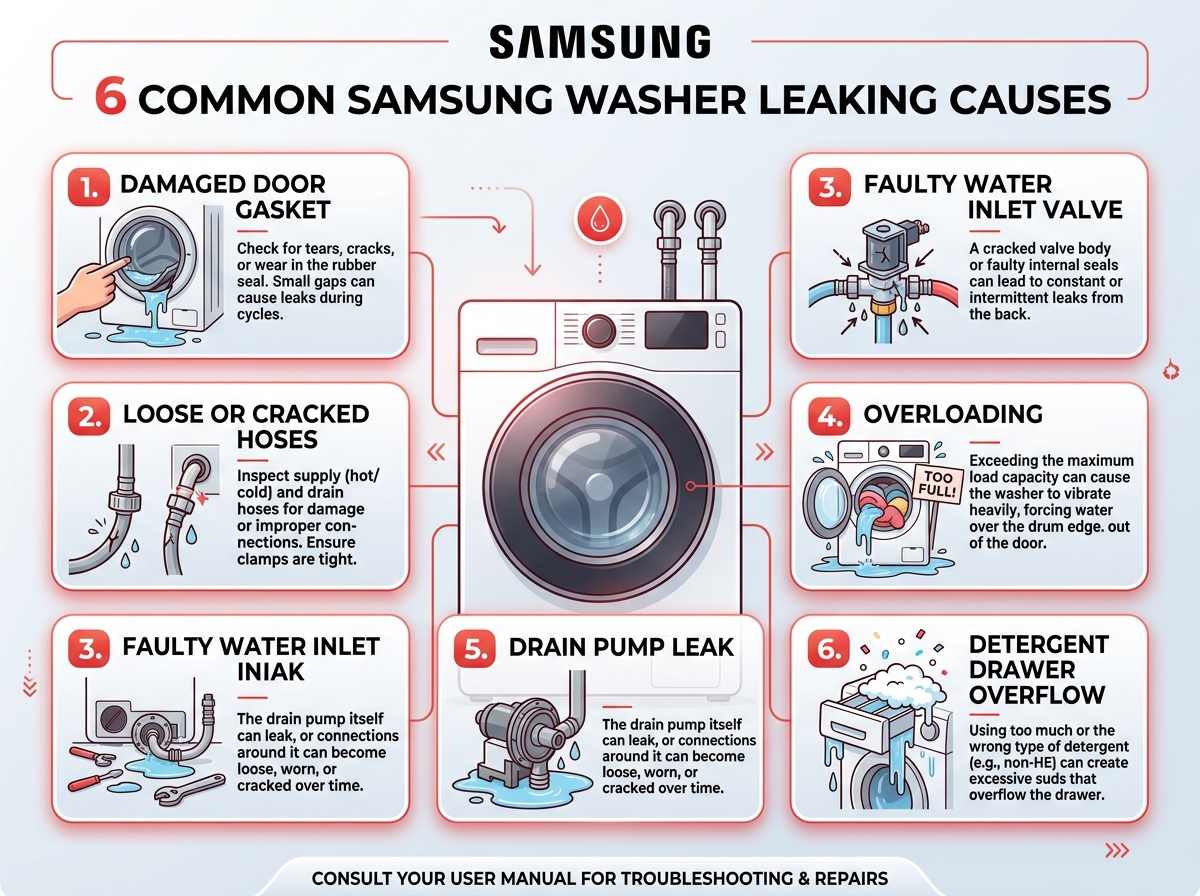
6 common Samsung washer leak causes: a quick diagnostic reference
Cause 1: Damaged door boot gasket
The door boot gasket is the rubber seal that creates a watertight connection between the front-load washer drum and the door glass. It is the most common source of leaks on Samsung front-loaders, especially in machines that are 5 years old or more.
The gasket fails in a few specific ways. The rubber can develop small tears or cracks from repeated compression and heat exposure. The outer lip can pull away from its retaining ring, creating a gap. And debris, hair, and small objects can lodge in the folds of the gasket, holding it slightly open and allowing water to seep through.
Check it by running a short cycle and watching whether water escapes from the door seal area during the wash phase. Inspect the gasket visually with the door open for tears, missing sections, or debris lodged in the folds. A gasket replacement on a Samsung front-loader typically costs $100 to $250 for the part plus $80 to $150 in labour.
Cause 2: Loose or cracked inlet and drain hoses
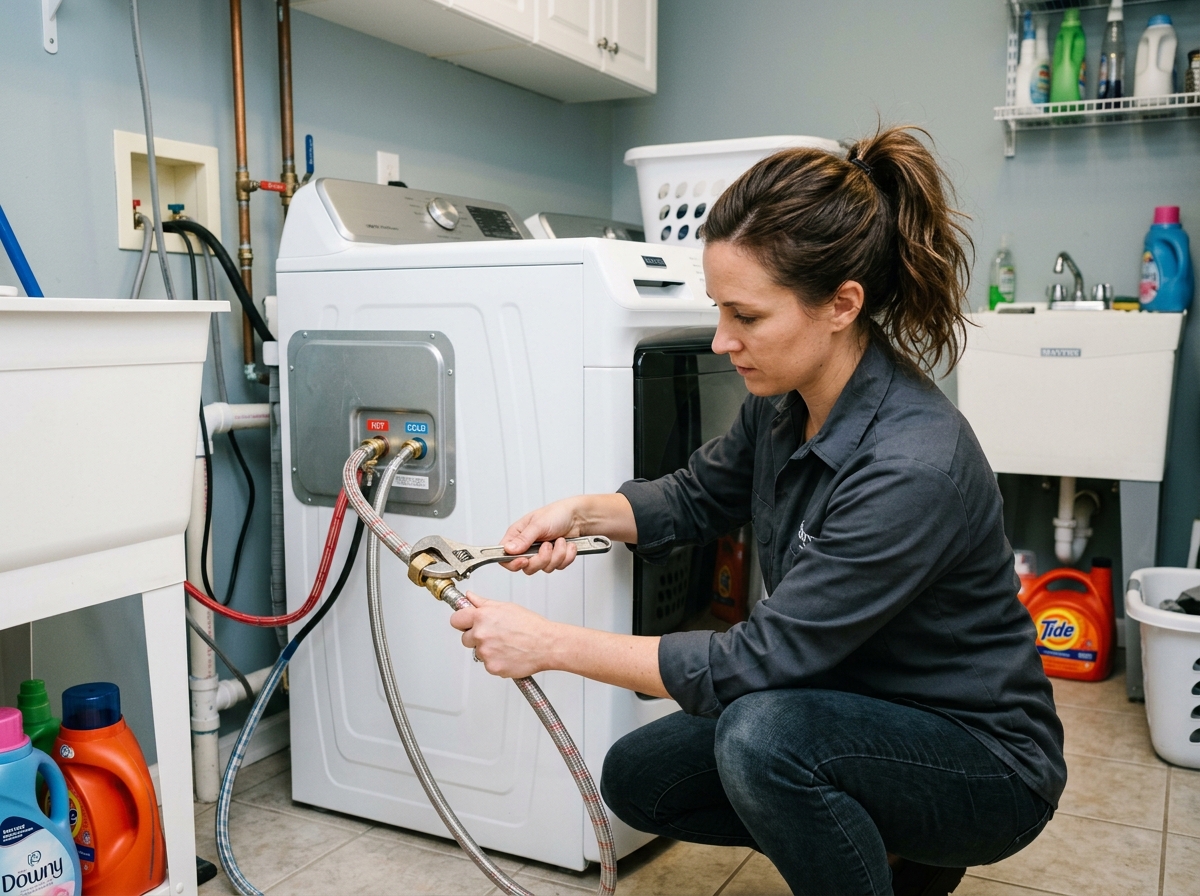
Samsung washers have two water inlet hoses (hot and cold) connecting to the household supply, and one drain hose running to the standpipe or utility sink. Any of these hoses can leak at three points: at the fitting where it connects to the machine, at the household connection, or along the body of the hose itself.
Pull the machine away from the wall and inspect all three hoses. Feel along the full length with your hand while the machine is running a fill cycle. Common findings: the large plastic drain hose fitting has worked loose at the machine end; an inlet hose has a small pinhole crack from age or kinking; or the rubber washer inside the inlet fitting has hardened and is no longer sealing properly. Hose replacements are affordable, typically $15 to $50 per hose for parts.
Cause 3: Faulty water inlet valve
The water inlet valve opens to allow water into the drum during the fill phase and closes when the correct level is reached. A valve that does not fully close creates a slow, continuous drip into the drum between cycles. In a front-loader, this eventually overflows through the door seal or drain. In a top-loader, the water can flow directly onto the floor from inside the cabinet.
A tell-tale sign of an inlet valve fault is water in the drum when the machine has not been running. If you open your Samsung washer and find standing water at the bottom between cycles, the inlet valve is likely at fault. Samsung inlet valve replacements cost $60 to $120 for the part plus labour.
Cause 4: Drain pump leak
The drain pump is typically located at the bottom front of Samsung front-loaders, near the pump filter access panel. The pump housing and its connecting hose fittings can develop cracks or loose connections over time, causing water to leak during the drain and spin phases.
Drain pump leaks are usually visible on the underside of the machine, dripping from the bottom front. If you see water pooling directly under the front of the machine (not around the back where the hoses are), the pump or its connections are the most likely source. Accessing and inspecting the pump requires tilting or removing the front panel on most Samsung models.
Cause 5: Overloading and excess suds
Samsung front-loaders are particularly sensitive to overloading. An overpacked drum shifts the load off-balance, causing excessive vibration that can temporarily open the door seal during high-spin cycles. More commonly on Samsung HE (high-efficiency) machines, using too much detergent creates excess suds that overwhelm the drum and push water out through the door seal or overflow tube.
Samsung HE washers require HE-specific low-suds detergent, used in the correct quantity. Use only the amount recommended on the packaging for HE machines, which is typically far less than the scoop line. If you have been using non-HE detergent or a full scoop in an HE machine, this is very likely the cause of your leak. Run a drum cleaning cycle with no detergent to clear residual suds. Samsung machines also have a specific tub clean cycle designed for this purpose.
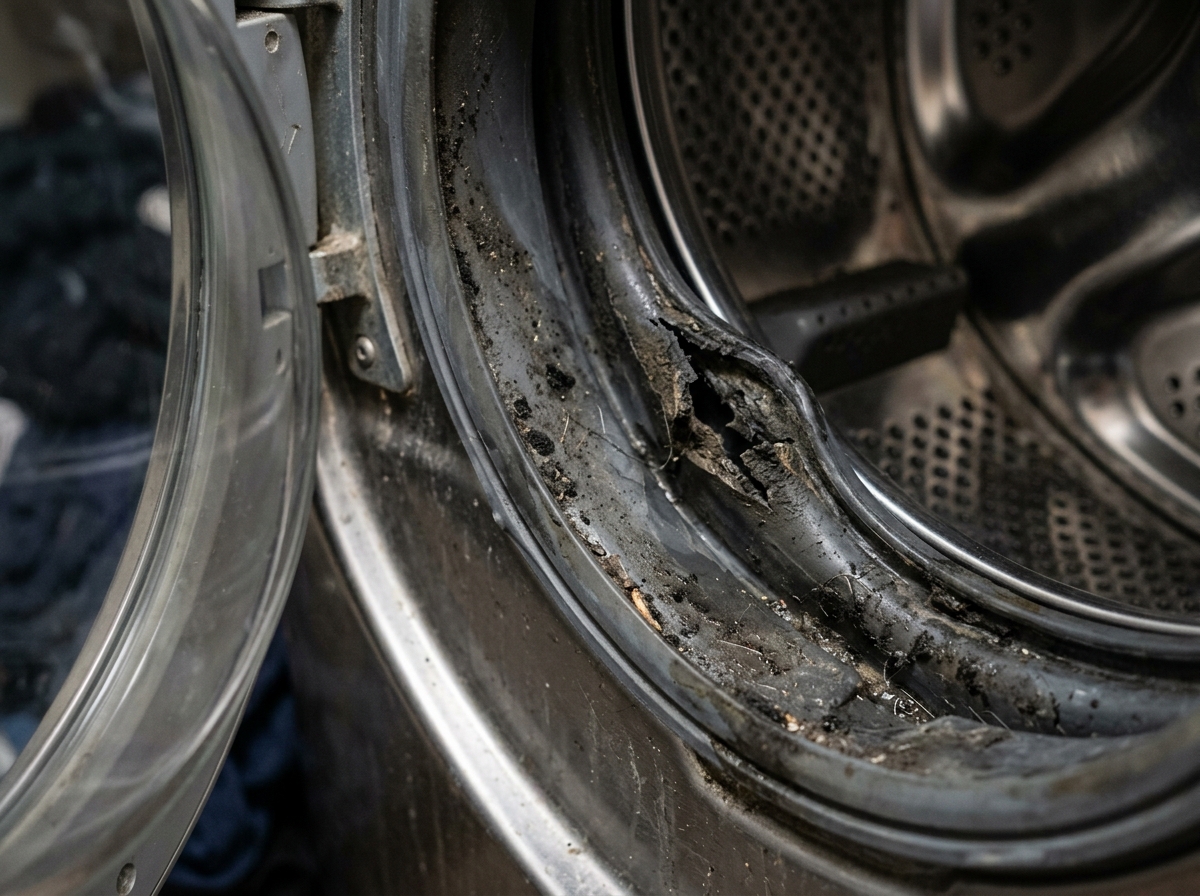 The door boot gasket is the most common source of leaks on Samsung front-loaders
Cause 6: Detergent drawer overflow
The detergent drawer in a Samsung front-loader uses jets of water to flush detergent into the drum. If the drawer is overfilled, or if the drawer housing has a calcium or detergent buildup blocking the flow channels, water backs up in the drawer housing and overflows onto the floor from the front of the machine.
This type of leak runs from the front upper area of the machine, not the bottom. Remove the detergent drawer completely and inspect the housing for scaling and residue. Clean with warm water and a soft brush. Make sure the softener compartment does not contain a dried plug of old softener restricting the flow. This is a zero-cost DIY fix in most cases.
How to identify where the leak is coming from
The location of the water on the floor gives you the fastest diagnostic clue. Water at the front of the machine during the wash phase points to the door gasket. Water running from the front during fill points to the detergent drawer or inlet valve. Water pooling at the back during fill points to the inlet hoses. Water underneath during spin and drain points to the drain pump or drain hose. Water only when the door opens suggests the gasket has debris holding it open.
Lay dry paper towels in a ring around the machine before running a cycle. After the cycle, check which towels are wet and where the wettest towel is located. This simple technique narrows the leak source significantly before any disassembly is required.
Repair cost guide: Samsung washer in Montreal (2026)
| Repair | Part cost (CAD) | Total estimate |
|---|---|---|
| Detergent drawer cleaning (DIY) | $0 | $0 |
| Inlet / drain hose replacement | $15 to $50 | $80 to $170 |
| Water inlet valve replacement | $60 to $120 | $140 to $250 |
| Door boot gasket replacement | $100 to $250 | $180 to $400 |
| Drain pump replacement | $60 to $150 | $140 to $300 |
| Drum seal / tub seal | $80 to $200 | $200 to $450 |
Red flag
Never ignore a leak that is getting progressively worse over days or weeks. That pattern almost always points to a component failure that is accelerating. A drain pump housing that is beginning to crack will fail completely and flood the laundry room. Get a diagnosis before the situation escalates.
Sources and references
- Samsung Canada – Washing machine troubleshooting
- Natural Resources Canada – ENERGY STAR certified washing machines
- Insurance Bureau of Canada – Home water damage prevention
Disclaimer
This article is for general guidance only. Appliance repair costs, safety recommendations, and best practices may change. Capital Appliance Repair Montreal is not liable for outcomes from actions taken based on this content. Always confirm with a licensed technician for your specific appliance and situation.
Frequently Asked Questions
Appliance repair across Greater Montreal
Capital Appliance Repair Montreal serves homeowners across the Greater Montreal region, including Laval, Longueuil, Brossard, Terrebonne, Repentigny, Blainville, and many more cities and suburbs. Same-day and next-day appointments are available.
Ready to fix your appliance?
Fast, affordable repairs throughout Montreal and suburbs.
Book a repair now


