




A fridge making loud humming noise is usually the compressor or a cooling fan working harder than it should, and most of the time it points to something simple like dirty condenser coils, a fan blade rubbing on ice, or the appliance sitting slightly off level. The trick is knowing which hum is normal Montreal-winter background sound and which one is your refrigerator repair service phone call waiting to happen.
Below is how to place the sound, what to check yourself in about ten minutes, and the clear red flags that mean you should stop poking around and let a technician look at it before a small hum turns into a warm fridge full of spoiled groceries.
In This Article
Normal Fridge Sounds Versus a Real Problem
Every fridge hums a little. The compressor cycles on and off through the day, and a soft, steady drone while it runs is exactly what you want to hear. What you are listening for is a change: a hum that got noticeably louder, that started rattling or buzzing, or that never seems to stop and cycle off the way it used to.
A good test is memory. If the noise is new, or if you can hear it from another room when you never could before, something has shifted. A fridge that hums louder and also feels warmer inside is telling you two things at once, and that combination is the one worth acting on quickly.
Quick Take
A soft, steady hum that cycles on and off is normal. A loud, constant, or rattling hum, especially paired with a fridge that is not staying cold, means it is time to investigate and possibly call for service.
What Causes a Fridge Making Loud Humming Noise
When a fridge starts making a loud humming noise, the source is almost always one of a handful of parts. Knowing the usual suspects helps you narrow it down before anyone opens a panel:
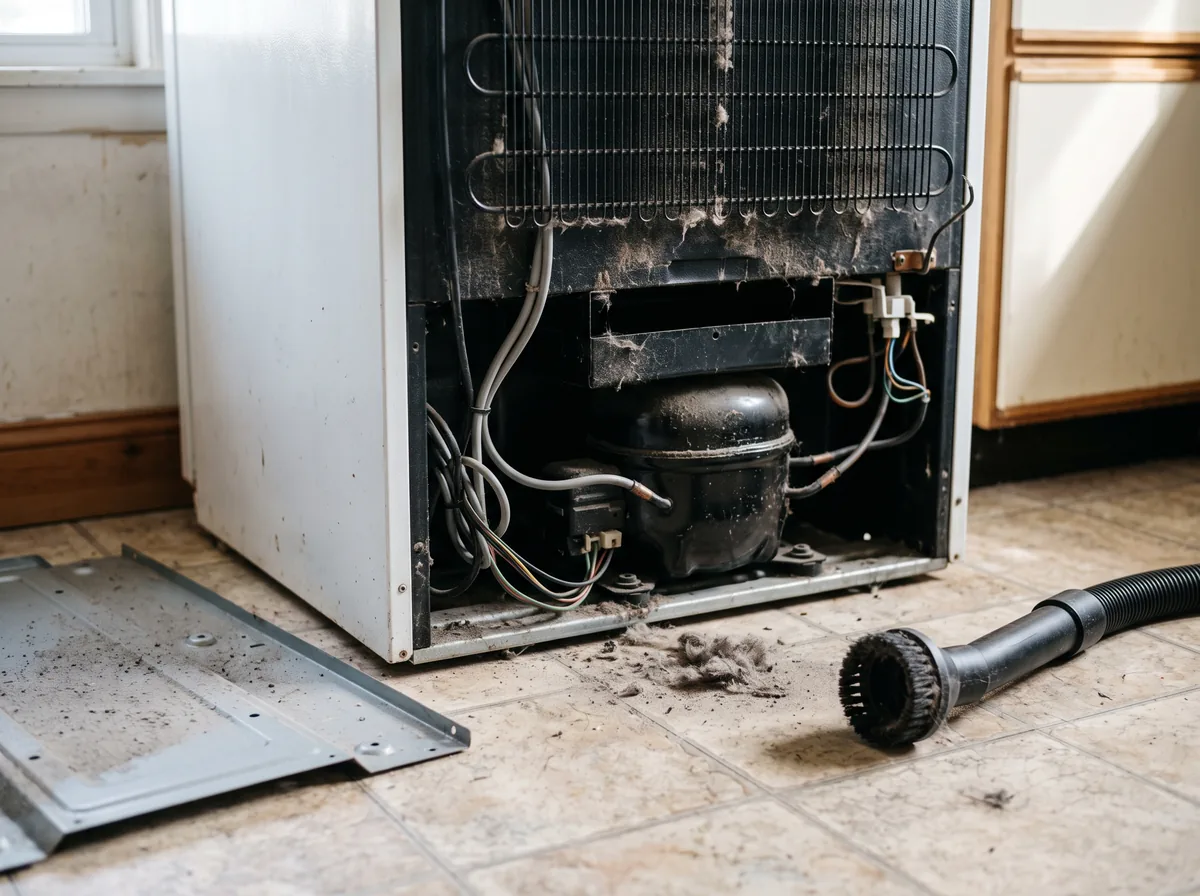
- Dirty condenser coils: When dust and pet hair coat the coils, the compressor runs longer and louder to shed heat. This is the single most common cause of a fridge that suddenly hums more.
- The condenser fan: A fan motor near the compressor can wear out or collect debris, which turns a smooth hum into a loud drone or buzz.
- The evaporator fan: Inside the freezer, this fan can hit a buildup of ice and start humming, whining, or clicking.
- A struggling compressor: The compressor is the heart of the cooling system, and an aging or overworked one gets louder as it strains.
- An unlevel or touching cabinet: A fridge that rocks slightly, or sits with its back or sides against a wall or cabinet, will buzz as vibration transfers into the surrounding surfaces.
Did You Know
The hum you hear is often not the broken part itself but vibration travelling through the floor and cabinets. A compressor that sounds alarming in a tight galley kitchen can be perfectly healthy. Where the fridge sits changes how loud the same motor sounds.
What to Check Before You Call a Technician
The checks below are limited to safe, no-tools steps any homeowner can do. Always unplug the refrigerator before cleaning coils or reaching behind it, and never remove interior panels, open the sealed cooling system, or touch wiring. If a step calls for tools, disassembly, or refrigerant work, stop and call a licensed technician. Capital Appliance Repair is not responsible for injury or damage from work attempted based on this article.
Run through this quick list in order. Most of the time you will find the culprit in the first two or three checks:
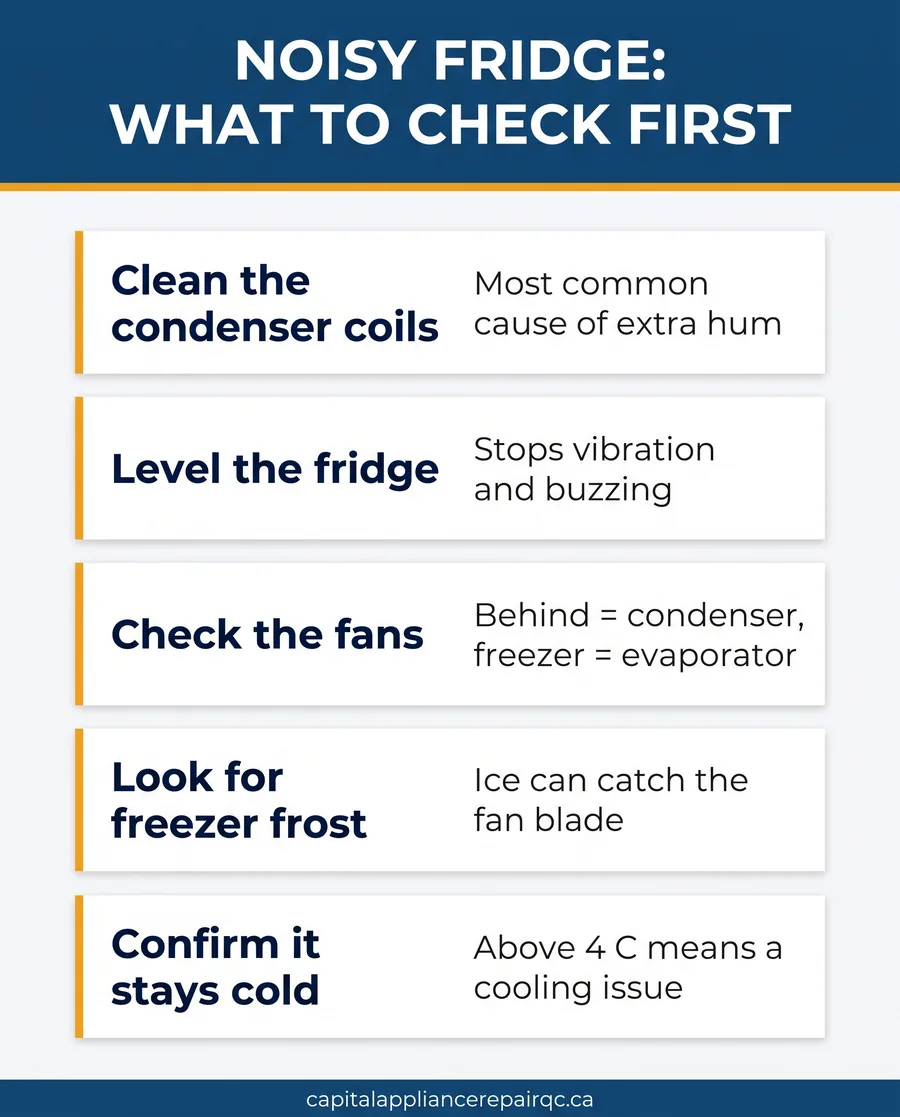
- Listen and locate: Stand at the front, then the back, then the freezer. Deciding whether the noise comes from behind (compressor or condenser fan) or inside (evaporator fan) tells you where to look.
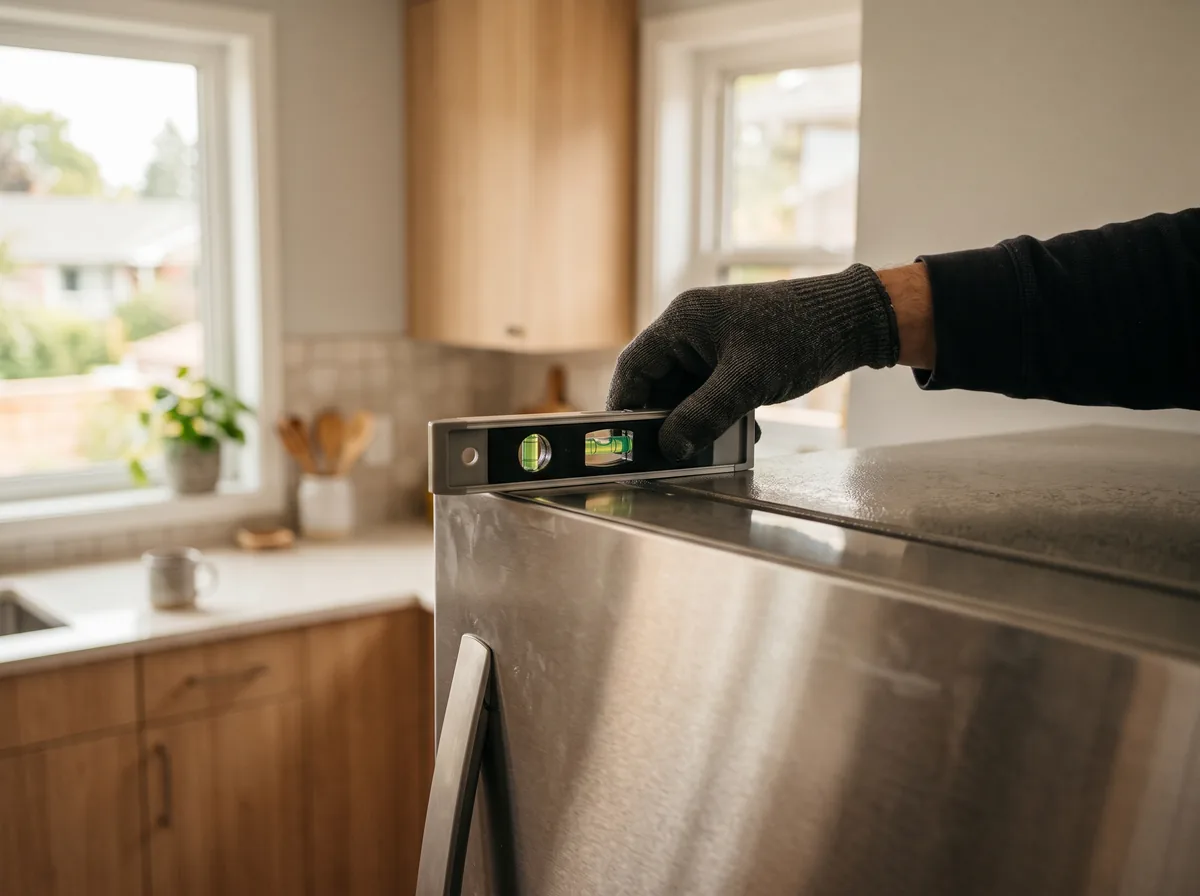
- Check that it is level: Gently rock the fridge. If it wobbles, adjust the front feet or add a shim so all four corners sit firm, and confirm it is not pressed against a wall or cabinet.
- Clean the condenser coils: Unplug the fridge, find the coils behind the kickplate or at the back, and vacuum off the dust. Dirty coils are the number one cause of extra hum and heat.
- Look for a frosted-up freezer: Heavy ice around the back interior wall of the freezer can mean the evaporator fan is hitting frost. A full manual defrost sometimes quiets it for a while.
- Check for spacing and load: Make sure there is a few centimetres of air gap around and behind the unit, and that vents inside are not blocked by packed-in food.
- Note whether it stays cold: Put a thermometer in the fridge. If it reads above 4 degrees Celsius while humming loudly, the noise is a symptom of a cooling problem, not just a rattle.
Pro Tip
Do the coil clean twice a year and put a reminder in your phone. In a Montreal home with pets or a busy kitchen, coils get dusty fast, and a ten-minute vacuum is the cheapest way to keep the compressor quiet and your energy bill lower.
When the Hum Means You Should Call a Pro
Some noises are a cleaning job. Others are a warning that a major component is failing, and pushing through them can cost you a fridge full of food or the fridge itself. Stop the DIY and book a technician if any of these show up:
Red Flags: Stop and Call for Service
- The hum is loud and constant and the fridge is no longer keeping food cold or freezing properly.
- You hear a loud buzz or click followed by the compressor shutting off and struggling to restart.
- The noise comes with a burning or hot electrical smell from the back of the unit.
- There is a puddle of oily fluid under or behind the fridge, which can mean a refrigerant or compressor issue.
- The hum came back within days of cleaning the coils and leveling the unit.
A failing compressor or a sealed-system leak is not a DIY fix. Those repairs need proper tools, refrigerant handling, and a licensed hand. If your fridge is showing these signs, a freezer and refrigerator repair technician can diagnose it before the food in it goes to waste.
Why Montreal Kitchens Make Fridges Hum Harder
Older triplexes and condos across Montreal often tuck the fridge into a tight nook with little clearance, so the same compressor that would be quiet in an open kitchen buzzes against the cabinets. Summer humidity makes the cooling system work harder, and a fridge in an unfinished basement or a hot top-floor apartment cycles more often and louder.
Provincial energy programs are worth a look while you are at it. Hydro-Quebec has practical guidance on keeping a refrigerator running efficiently, and if you are weighing a replacement, the ENERGY STAR refrigerator ratings show which models run quieter and cheaper. A loud, old fridge that hums constantly is often burning more power than a new one would.
People Often Ask: Can a Humming Fridge Be Dangerous?
A normal hum is harmless. The concern is a hum paired with heat, a burning smell, or a compressor that keeps trying to start and failing, which can stress the electrical circuit. If you notice any of those, unplug the fridge and call a technician rather than leaving it running unattended.
What Repairs Typically Cost
Here is a rough sense of what different fixes for a noisy fridge run, so a loud hum does not catch you off guard. Treat these as general Montreal-area planning figures, not a quote:
| Cause of the Noise | Typical Fix | General Cost Range | DIY Friendly? |
|---|---|---|---|
| Dirty condenser coils | Clean and vacuum coils | $0 to $150 | Yes |
| Unlevel or vibrating cabinet | Level, shim, add clearance | $0 | Yes |
| Condenser or evaporator fan | Replace fan motor | $150 to $350 | Technician |
| Frost buildup on evaporator | Defrost, check defrost system | $150 to $400 | Sometimes |
| Failing compressor | Compressor repair or replace unit | $400 and up | Technician |
Pricing note: These are general Montreal-area ranges as of 2026 for guidance only. Actual cost depends on the make, model, age, and parts availability of your specific fridge. Always get a written estimate before authorizing any repair, and weigh the cost against the price of replacing an aging unit.
Save Your Money
If the fridge is over twelve years old and needs a compressor, replacement usually beats repair. A new ENERGY STAR model runs quieter and can pay back part of its cost in lower hydro bills. For anything younger, a fan or coil fix is almost always worth doing.
“Turned out my loud fridge was just filthy coils and the whole thing was jammed against the wall. Ten minutes with a vacuum and pulling it out an inch, and it went quiet. Wish I’d checked that before assuming the worst.”
— r/appliancerepair homeowner, 2024
Download the Free Quick Guide
A one-page checklist to place the sound, run the safe checks, and know the red flags that mean it is time to call a technician.
Frequently Asked Questions
Still hearing a loud hum after cleaning the coils and leveling the unit? Capital Appliance Repair diagnoses noisy fridges, replaces worn fans, and handles compressor issues across Laval, Longueuil, Brossard, and the wider Montreal region. Book a service visit and we will find the source of the noise before it becomes a warm fridge full of spoiled food.


