


Front-Load vs. Top-Load Washers: Which Lasts Longer?
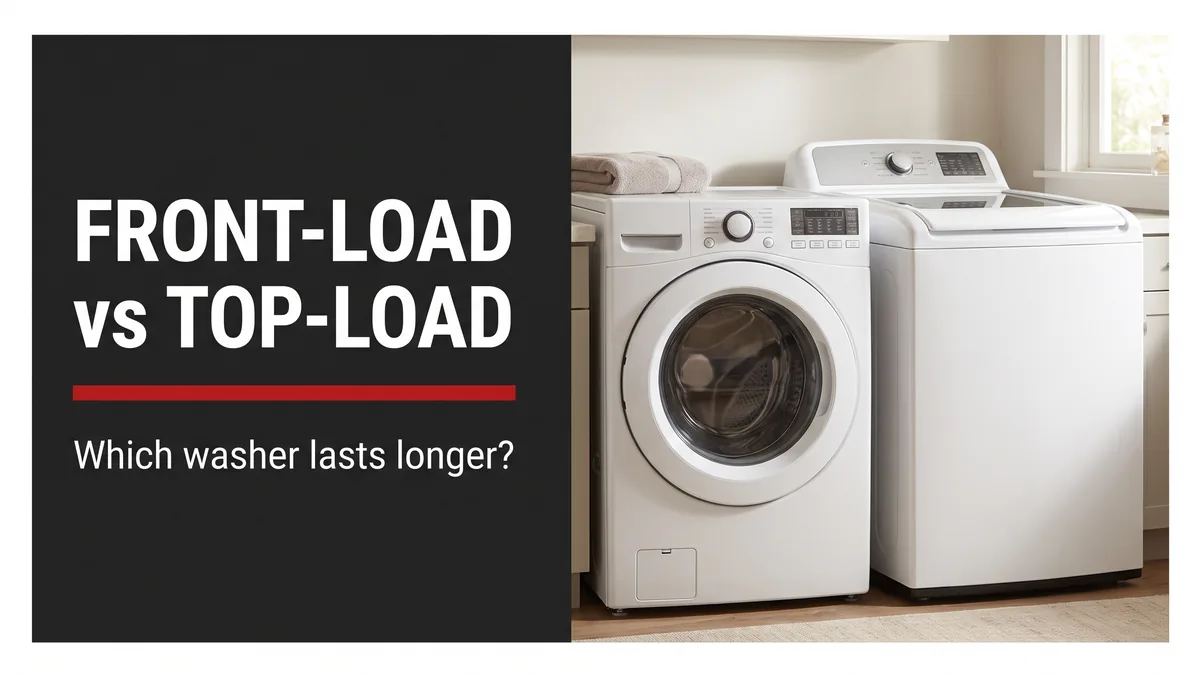
Shopping for a new washing machine in Montreal usually comes down to one honest question: front load vs top load washer, which one will still be running in ten years? Plenty of people assume a top-loader always lasts longer because it is simpler. The real answer is messier, and it depends far more on the type of machine and how you look after it than on the door orientation. If your current washer is on its last legs, a quick call to a professional washing machine repair technician can tell you whether it is worth saving before you spend a cent on a replacement.
This guide compares the two designs on the things that actually decide washer reliability: how long each tends to last, where each one breaks down, what those repairs cost around Montreal, and the efficiency and maintenance trade-offs. By the end you should know which type lasts longer for a household like yours, and why.
Quick take
The lazy answer is “top-loaders last longer.” The accurate answer is that a modern high-efficiency front-loader and a high-efficiency top-loader both run about 10 to 14 years, while an old-school agitator top-loader is simpler but often wears out sooner. Which one lasts longer in your laundry room depends on the exact model and, more than anything, whether you maintain it.
Front load vs top load washer: Which lasts longer
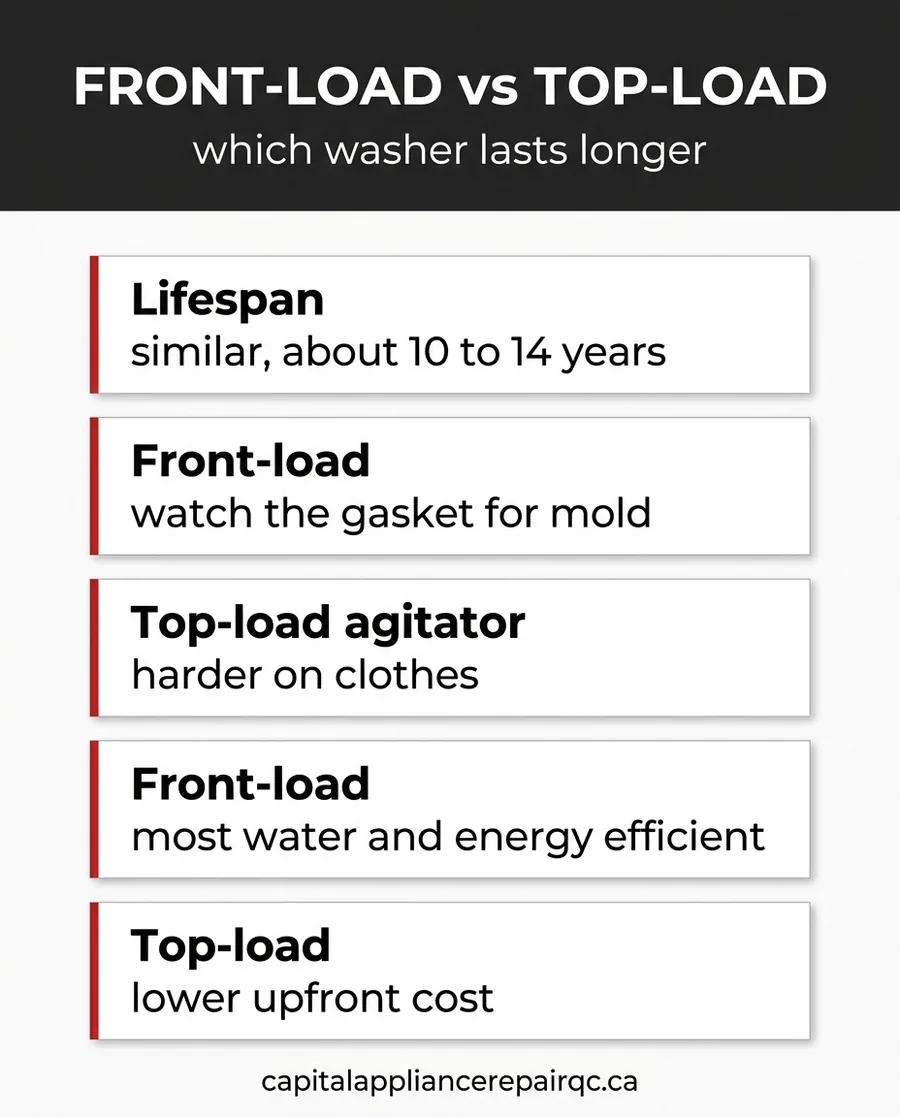
Start with the number everyone wants. Across the industry, a well-kept washing machine lasts somewhere between 10 and 14 years. That range holds for both designs, which surprises people who expect one to clearly dominate. The differences are real, but they live in the details, not in a simple “this one wins” verdict.
- Front-load washers typically run 10 to 14 years. They are gentle on clothes and sip water, but the door gasket and drum bearings are known weak points if maintenance slips.
- High-efficiency (HE) top-load washers match that 10 to 14 year window. They ditch the center agitator for an impeller, so there is less to wear out mechanically, though they lean harder on electronics.
- Traditional agitator top-loaders are the simplest of the three. They often land closer to 8 to 12 years because the agitator, transmission, and drive components take a beating over time.
So the honest ranking is not front versus top. It is HE versus old-school agitator, with maintenance as the tie-breaker. Here is how the two families stack up side by side.
| Factor | Front-load | Top-load (HE / agitator) |
|---|---|---|
| Typical lifespan | 10-14 years | 10-14 HE / 8-12 agitator |
| Common failures | Door gasket mold, bearings, pump | Transmission/agitator, electronics |
| Water and energy use | Lowest | Higher, esp. agitator |
| Gentleness on clothes | Gentler | Agitator harder on fabric |
| Maintenance | Wipe gasket, leave door ajar | Less mold-prone |
| Best for | Efficiency, stacking, big loads | Lower upfront cost, quick loads, no bending |
Where each type tends to fail
Longevity is really a story about failure points. Every washer eventually needs something, and the two designs tend to break in predictable, different ways. Knowing them tells you what you are signing up for.
Front-load weak spots
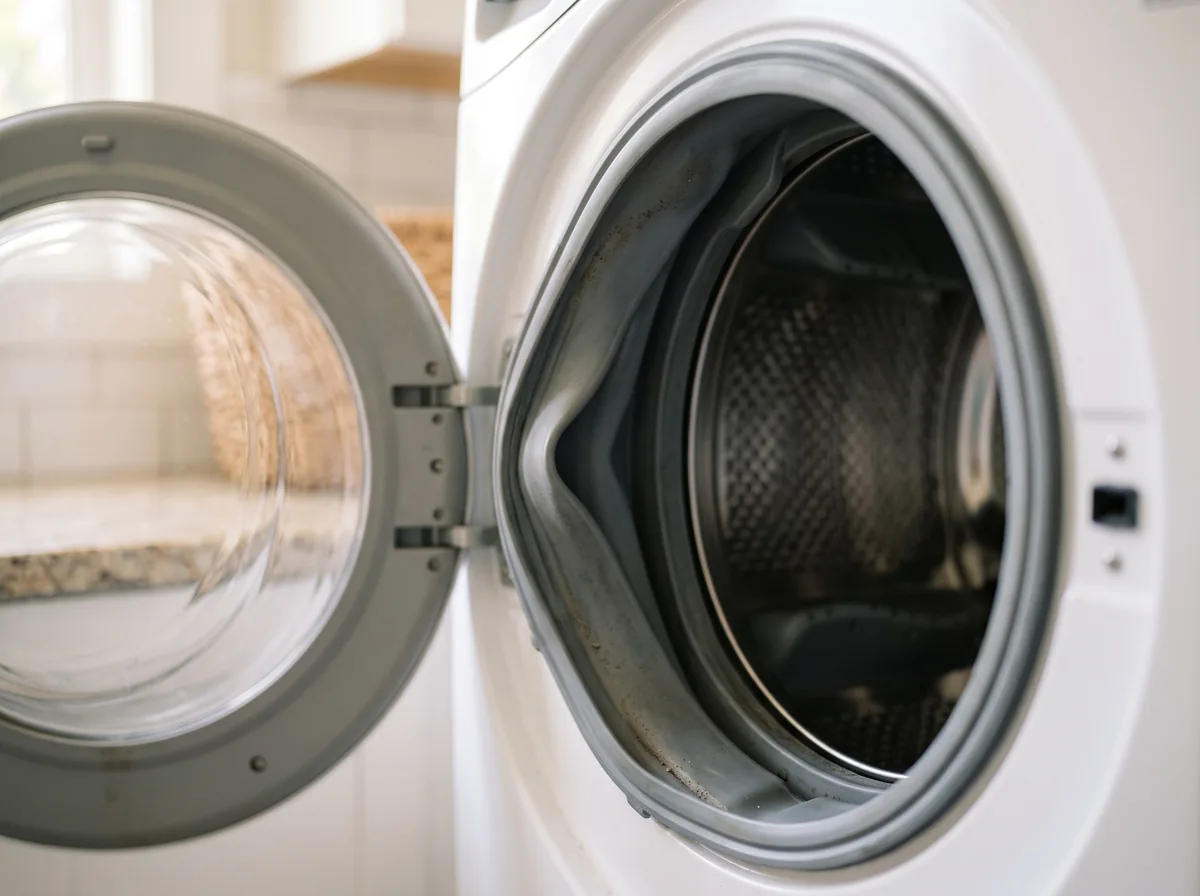
- Door boot and gasket: The rubber seal traps water, lint, and detergent. Left unwiped it grows mildew and eventually tears or leaks. This is the single most common front-load complaint, and it is almost entirely preventable.
- Drum bearings: Front-loaders spin fast to extract water. Over years the rear bearings wear and you hear a growing rumble or grinding on the spin cycle. Bearing jobs are labour-heavy, which makes them the pricey repair.
- Drain pump: Coins, hairpins, and clothing debris clog or burn out the pump, leaving standing water in the drum.
Top-load weak spots
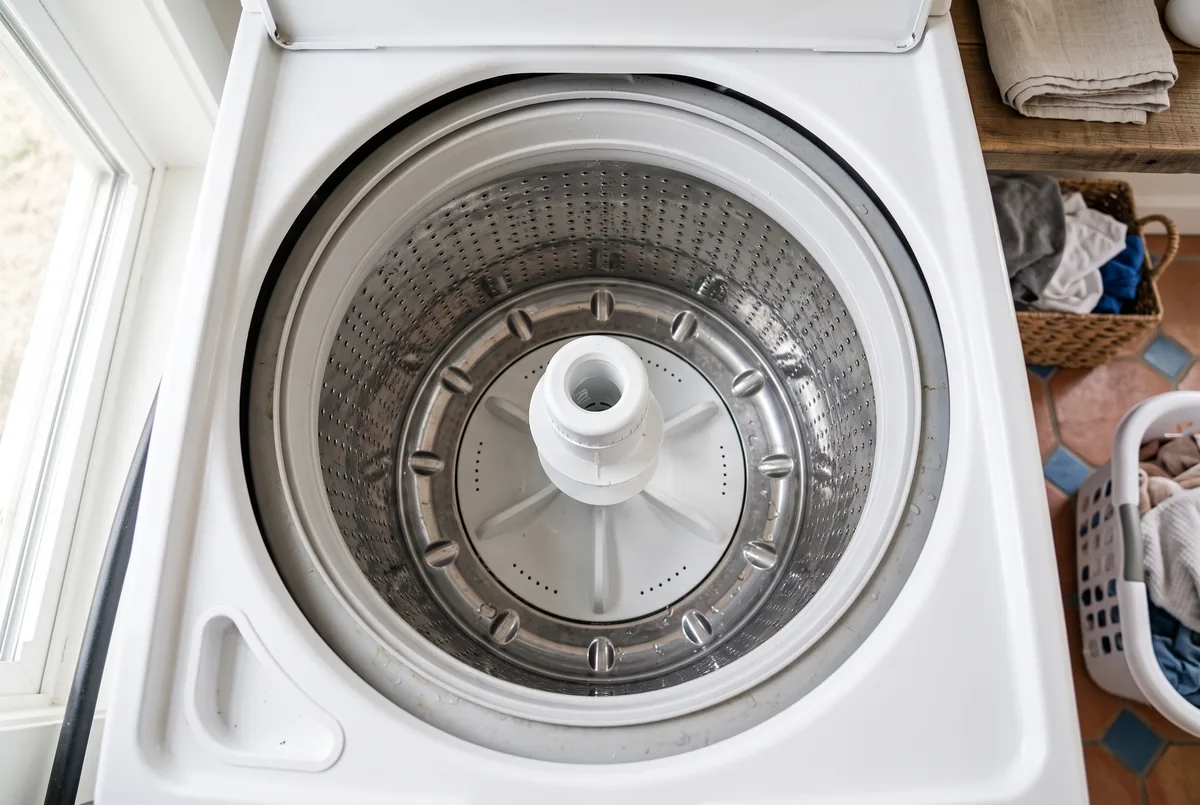
- Agitator and transmission (traditional): The mechanism that twists the agitator back and forth wears out. Agitator “dogs,” the little plastic cams, strip first, then the transmission itself.
- Electronics (HE): HE top-loaders trade mechanical parts for sensors and control boards. When something quits, it is often an electronic fault rather than a worn gear.
- Lid switch and balance: Both top-load styles rely on a lid lock and suspension. Off-balance loads and a failing switch are frequent, usually minor, service calls.
None of these mean a machine is disposable. Most are straightforward for a technician, and our team handles them daily on Samsung washers, LG models, Whirlpool units, and Maytag machines across the city.
What washer repairs really cost in Montreal
Reliability is not only about how often something breaks. It is about whether the fix is worth it when it does. Here is where the two designs part ways on the wallet. Front-load bearing jobs are the expensive outlier; most other repairs land in similar territory for both types. These are typical parts-and-labour ranges around Montreal in 2026.
| Common washer repair | Typical Montreal cost (2026) |
|---|---|
| Door gasket / boot seal (front-load) | $200 to $450 |
| Drain pump | $180 to $380 |
| Drum bearings (front-load) | $350 to $700 |
| Agitator / transmission (top-load) | $250 to $550 |
| Control board | $250 to $500 |
These ranges are estimates based on typical Montreal market rates in 2026. Your actual price depends on the brand, model, and age of the machine, the specific part, and parts availability. Always get a quote before authorizing work. Capital Appliance Repair does not guarantee any specific price.
A useful rule of thumb: if a single repair costs more than half the price of a comparable new machine and the washer is past the decade mark, replacement usually makes more sense. Under that threshold, fixing it is almost always the greener and cheaper move. When you do replace, book new washer installation so the levelling and hoses are done right, which itself prevents a chunk of early failures.
Efficiency and the maintenance that adds years
Front-loaders win the efficiency contest cleanly. They use the least water and energy of any washer type, HE top-loaders come next, and traditional agitator machines use the most because they fill a full tub every cycle. Over a decade of Montreal water and hydro bills, that gap adds up.
For the actual numbers on water and energy use, Natural Resources Canada publishes efficiency ratings and ENERGY STAR guidance you can check against any model before you buy. It is an independent reference worth a look when two machines seem otherwise equal.
Did you know?
Most front-load “mold” complaints trace back to two skipped habits: leaving detergent residue in the gasket and shutting the door tight after every wash. Wipe the boot seal dry, run a monthly hot cleaning cycle, and leave the door ajar between loads. That one routine prevents the most common front-load failure and easily adds years of service.
Top-loaders are naturally more forgiving here. Gravity drains them, they air out through an open lid, and they rarely develop the same smell. The maintenance trade is simpler but not zero: keep loads balanced, clean the dispensers, and do not overload the agitator.
Which washer fits which Montreal household
There is no universally “best” washer, only the right fit for how you live. Match the machine to your habits and the longevity question mostly takes care of itself.
- Choose a front-loader if you run big or heavy loads, want the lowest water and hydro bills, plan to stack a dryer on top in a tight Montreal condo, and you are willing to wipe the gasket. It is the efficiency and capacity champion for people who maintain it.
- Choose an HE top-loader if you want strong efficiency without the gasket upkeep, prefer loading without bending, and like the option of tossing in a forgotten sock mid-cycle.
- Choose a traditional agitator top-loader if upfront cost matters most, you want fast, simple cycles, and you value a machine with fewer electronics to fail, accepting a slightly shorter lifespan and higher water use.
Save your money
Before you write off an aging washer, get it diagnosed. A $200 gasket or pump repair on an eight-year-old machine is far cheaper than a $1,200 replacement, and often the “dead” washer just needs one part. If you are weighing repair against replacement, a quick visit for washer repair in Montreal settles it fast.
Capital Appliance Repair services and installs both types across Laval, Longueuil, Brossard, and the rest of our Greater Montreal service area.
The bottom line
Verdict: for pure longevity and reliability, a well-maintained HE front-loader and a HE top-loader are a near tie at 10 to 14 years, and both outlast a traditional agitator machine. Front-loaders reward maintenance with efficiency and gentleness; top-loaders reward convenience with lower fuss. Pick the one that matches your habits, keep up the simple upkeep, and either design will give you a decade of clean laundry.
Frequently asked questions
Still not sure whether to repair your current washer or replace it? Capital Appliance Repair diagnoses front-load and top-load machines across Greater Montreal and gives you a straight answer, no upsell. Book a washer technician and get your laundry back to normal.


