



What to Do When Your Refrigerator Leaks Water on the Floor
Walked into the kitchen and found a puddle spreading out from under the fridge? Here is the short answer: most of the time, a refrigerator leaking water onto the floor traces back to a clogged defrost drain, and that is a fix many Montreal homeowners can handle in an afternoon. The rest of the time it is a cracked water line, an overfull drain pan, or a fridge that is not sitting level. Before you panic or book professional refrigerator repair, it helps to know which one you are dealing with.
Water on the floor is annoying, and near an electrical appliance it is a little risky too. This guide walks you through finding the source, the five usual causes, the fixes worth trying yourself, and the point where a fridge leaking water becomes a job for a technician. Let us start where it matters most: safety.
Find the source before you do anything else
A puddle can travel. Water pools at the lowest point of your floor, which is rarely the spot where the leak actually starts. So before you grab a wrench, figure out where the water is coming from. Pull the fridge out a few inches, dry the floor completely, and watch for a minute or two to see where the fresh water appears – the back, the freezer, the front kick plate, or a supply line running to the wall.
Red flag
If the puddle has reached a wall outlet, an extension cord, or the fridge power plug, stop and unplug the unit at the breaker if you have to. Water plus a live electrical connection is a shock hazard, not a mess to mop up first. Never stand in the water while you reach for the plug.
This article is general information only. A water leak near an electrical appliance can be a shock hazard – unplug the unit before you investigate. Capital Appliance Repair is not liable for outcomes from actions taken based on this content. If you cannot find or stop the leak, call a technician.
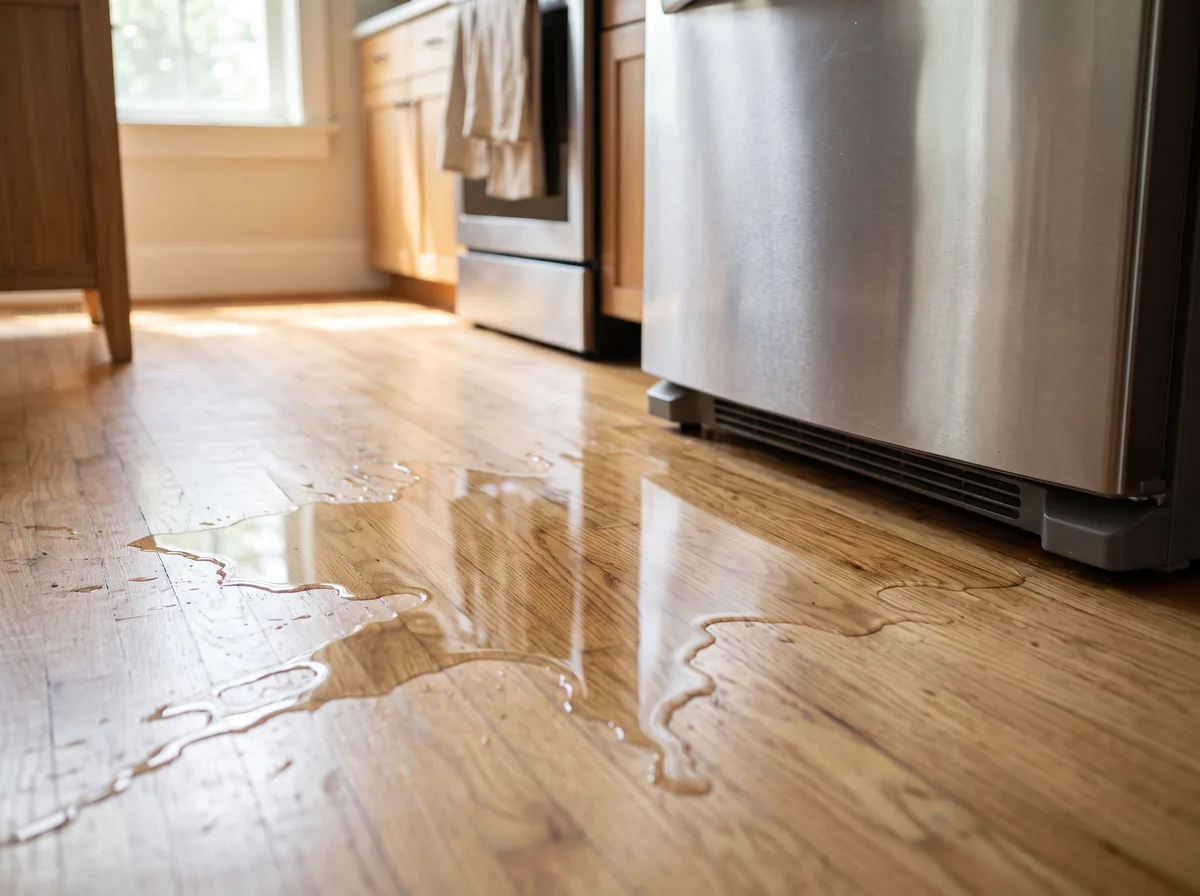
The common causes of a refrigerator leaking water
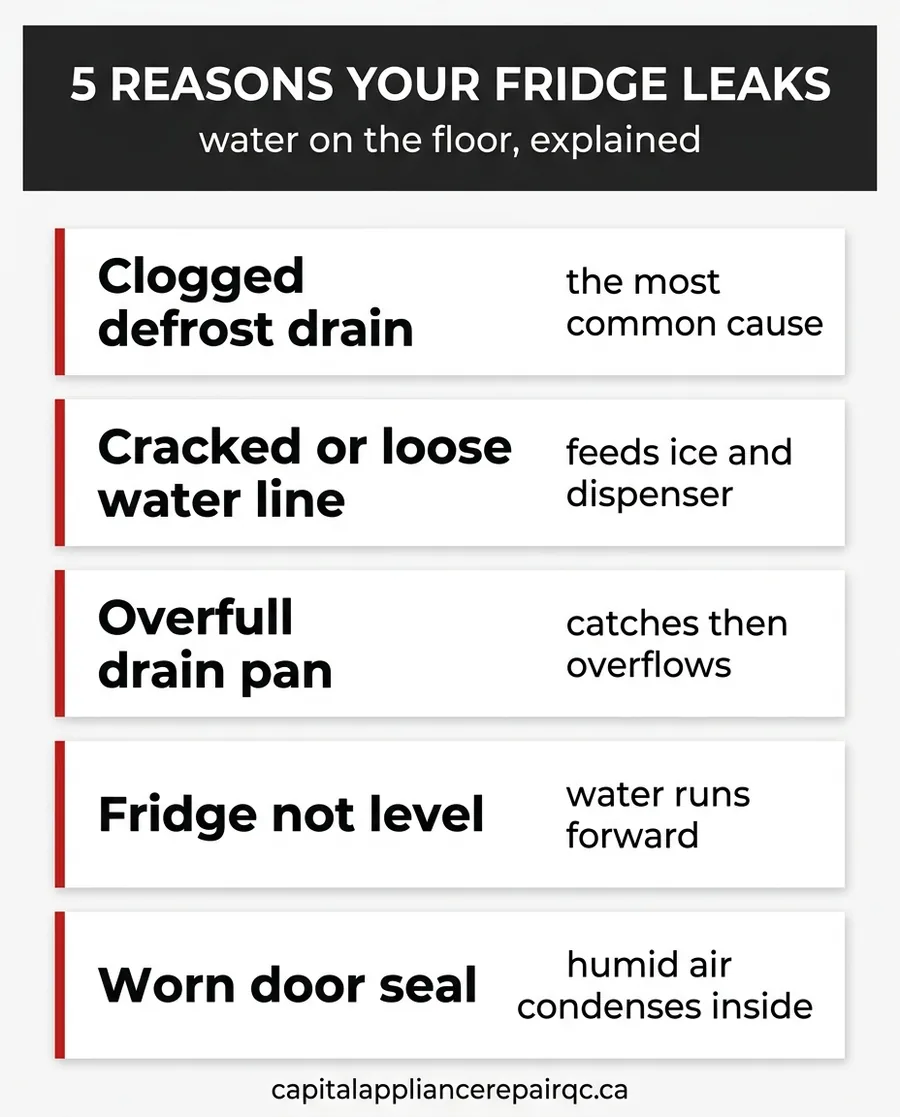
Nearly every floor leak comes down to one of five things. Knowing which one you are looking at tells you whether this is a ten-minute job or a call to a pro.
- A clogged or frozen defrost drain. This is the most common cause by a wide margin. As the freezer defrosts, melt water is supposed to run down a small drain to a pan underneath. Food debris and ice block that drain, so the water backs up and spills out the bottom onto your floor.
- A cracked or loose water line. If your fridge has an ice maker or a water dispenser, a thin supply line feeds it. That line can crack, work loose at a fitting, or freeze and split, leaving a steady drip behind or beneath the unit.
- An overfull or cracked drain pan. The pan under the fridge catches defrost water and lets it evaporate. If it cracks, tips, or simply overflows in humid Montreal summers, the excess ends up on the floor.
- A fridge that is not level. Refrigerators are meant to sit a touch higher at the front so water drains toward the back. An unlevel unit sends that water forward and out instead.
- A worn or failing door seal. A cracked gasket lets warm, humid air sneak in. That air condenses inside, drips down, and can pool at the base – a sneaky one people rarely check.
Two of these, the defrost drain and the door seal, are things most people can inspect and often fix themselves. The water line and a cracked pan sit closer to technician territory, especially if the line runs inside a wall.
What to try yourself
Work through these in order and stop as soon as the leak stops. A quick disclaimer first, because you will be working around both water and electricity.
Unplug the fridge before you reach behind it or open any panel. If you are not comfortable moving a heavy appliance or working near the water line, skip to calling a technician. These steps are general guidance and vary by make, model, and year.
- Unplug the fridge and locate the source. Kill the power, pull the unit out, and confirm where the water is actually coming from before you touch anything.
- Check and clear the defrost drain. Find the small drain hole at the back of the freezer floor. Clear any ice with a bit of warm water, then flush the drain with warm water and a turkey baster to push out the food gunk causing the backup.
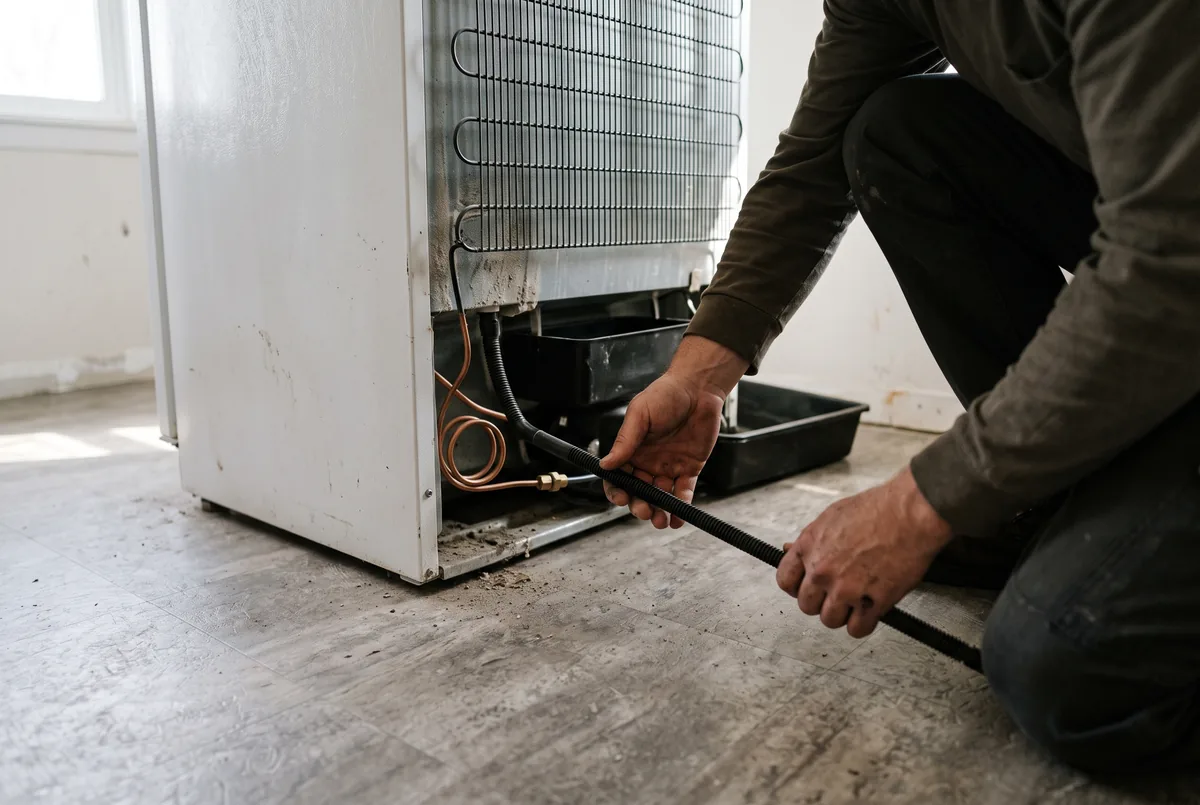
- Inspect the water supply line and shutoff. Trace the thin plastic or copper line to the ice maker and dispenser. Look for cracks, kinks, or a loose fitting, and check the shutoff valve behind the fridge is snug, not weeping.
- Empty and reseat the drain pan. Slide out the pan underneath, empty it, check it for cracks, and set it back level so it catches water instead of spilling it.
- Level the fridge slightly back. Adjust the front feet so the unit tilts a hair backward. That lets defrost water run to the drain the way the design intends.
- Call a technician if the leak continues. If the water keeps coming after all of the above, the problem is likely a damaged line, a failed pan, or a defrost system fault that needs a pro.
Pro tip
The turkey baster trick fixes more fridge leaks than anything else on this list. Fill it with warm (not boiling) water, press the tip into the defrost drain hole, and give a few firm squeezes. You will usually hear the clog let go and gurgle down into the pan. Keep a baster in the kitchen just for this.
Which fixes are DIY and which need a technician
Not every leak is a DIY job. Here is a quick read on what most Montreal homeowners can handle and what is better left to someone who does appliance repair every day.
| The problem | DIY or technician? |
|---|---|
| Clogged or frozen defrost drain | DIY for most people – flush with warm water |
| Overfull drain pan | DIY – empty and reseat the pan |
| Fridge not level | DIY – adjust the front feet |
| Worn door seal letting in humid air | DIY to inspect, technician to replace on some models |
| Cracked or loose water line | Technician – risk of a bigger leak if done wrong |
| Defrost system or drain heater failure | Technician – needs diagnosis and parts |
Brand matters a little here too. Sealed systems and proprietary parts on a Samsung refrigerator, a LG unit, a Whirlpool fridge, or a built-in Sub-Zero can make the water line and defrost repairs trickier than they look. If the fix means opening the sealed system, that is a technician job on any brand.
When to call a Montreal appliance repair technician
Two situations mean it is time to stop troubleshooting. First, the leak keeps coming after you have cleared the drain, emptied the pan, and leveled the unit – that points to a damaged line or a defrost fault. Second, you find a cracked water line or a leak that runs back into the wall, where a small drip can rot cabinetry and subfloor fast.
A local technician can pinpoint the source, replace a split line or drain heater, and check the whole defrost system in one visit. Capital Appliance Repair serves homes across Greater Montreal, from Laval to Longueuil and Brossard – see the full areas we cover to check your neighbourhood. For model-specific guidance on a newer fridge, the Samsung Canada appliance support hub is a solid manufacturer reference for locating drains and water lines.
Save your money
A clogged defrost drain is one of the cheapest fixes in the appliance world, so do not let anyone talk you into a new compressor or a whole new fridge before the drain and pan have been ruled out. Ask for a diagnosis first. Clearing a drain and swapping a $20 water line beats replacing a working appliance.
Download the free quick guide
Save this as a PDF and keep it handy.
Fridge Leaking Water Checklist – Free PDFQuick recap
- Find the source first
Dry the floor, watch where fresh water appears, and mind any water near electrical. - Blame the defrost drain first
A clogged drain is the most common cause and the easiest to flush clear. - Check the water line and drain pan
A cracked line or an overfull pan is the next thing to inspect. - Level the fridge
A slight backward tilt sends defrost water to the drain, not your floor. - Call a pro if it keeps leaking
A damaged line, failed pan, or defrost fault needs a technician.
Frequently asked questions
Cleared the drain, checked the line, and the floor is still wet? That usually means a damaged part or a defrost fault that needs the right tools. Capital Appliance Repair diagnoses and fixes fridge leaks across Greater Montreal, often the same week. Book an appliance technician and stop the puddle before it reaches your cabinets.


