



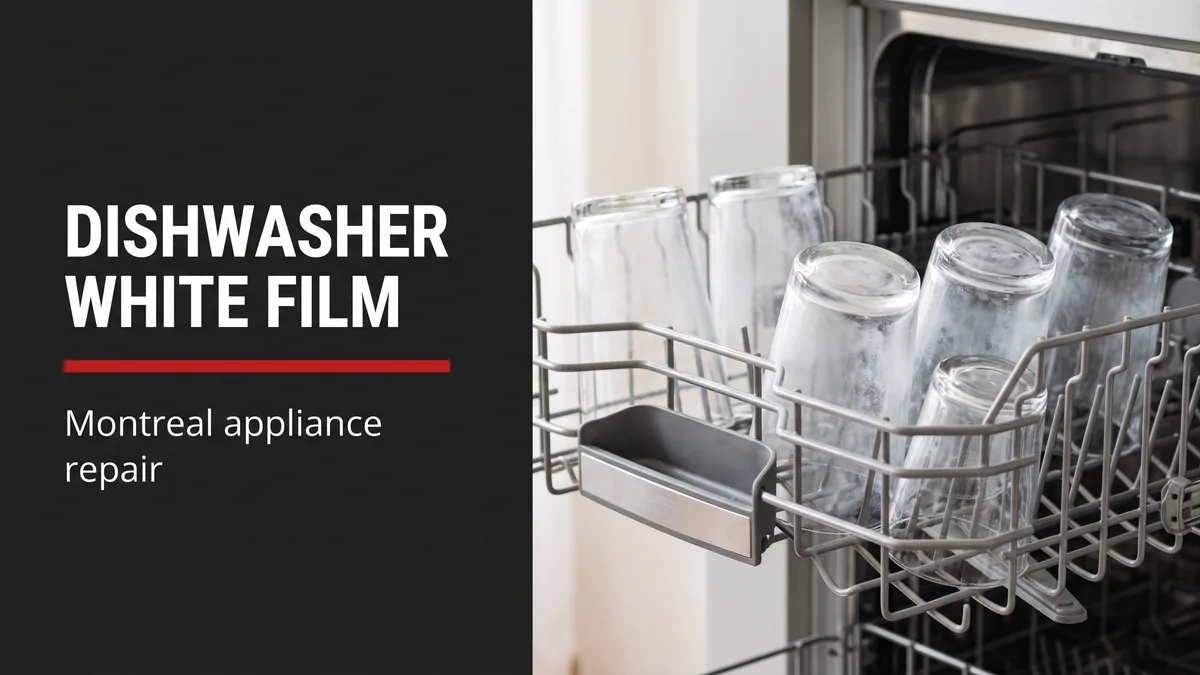
You open the dishwasher, reach for a clean glass, and it looks worse than when it went in. A dull, chalky haze coats the drinking glasses, the water tumblers, and even the delicate wine stems. That cloudy, grayish coating is dishwasher white film, and in a city like Montreal, it is one of the most common complaints we hear before a professional dishwasher repair call. The good news is that most of the time, it is not your dishwasher breaking down at all.
The haze is almost always one of two things. Either it is a hard water film, which is a mineral deposit that wipes off, or it is glass etching, which is permanent physical damage to the glass itself. They look very similar in the rack, but they are absolutely not the same problem, and only one of them is fixable. This guide shows you exactly how to tell them apart, how to clear removable film off your cloudy glasses, and how to know when the dishwasher itself is actually at fault.
In This Article
What Causes Dishwasher White Film on Glasses
Montreal and the surrounding regions sit entirely on hard water. That means the municipal tap water naturally carries a lot of dissolved calcium and magnesium. When the dishwasher heats that water and then dries your glasses, the heavy minerals stay behind as a thin white or gray coating. Add a few other factors to the mix and the film gets noticeably worse.
- Hard Water: The single biggest driver. Quebec tap water is mineral-rich, so deposits build incredibly fast without help from a rinse aid.
- No Rinse Aid: Rinse aid changes exactly how water sheets off the glass so minerals rinse away entirely instead of drying on.
- Too Little or Old Detergent: Underdosing, or using detergent that has gone hard and clumpy in a humid cupboard, leaves stubborn residue behind.
- Water That Is Not Hot Enough: Detergent needs high heat to properly dissolve and work. A cool cycle leaves both soap scum and minerals on your dishes.
- An Overloaded Rack: When glasses touch each other or block the spray, the rinse cycle never reaches every surface evenly.
None of those issues point to a broken machine. They are entirely about water chemistry and daily habits, and every single one of them has a simple fix. The trick is knowing whether the film on your glasses is the removable kind before you spend time scrubbing.
Hard Water Film or Glass Etching: How to Tell Them Apart
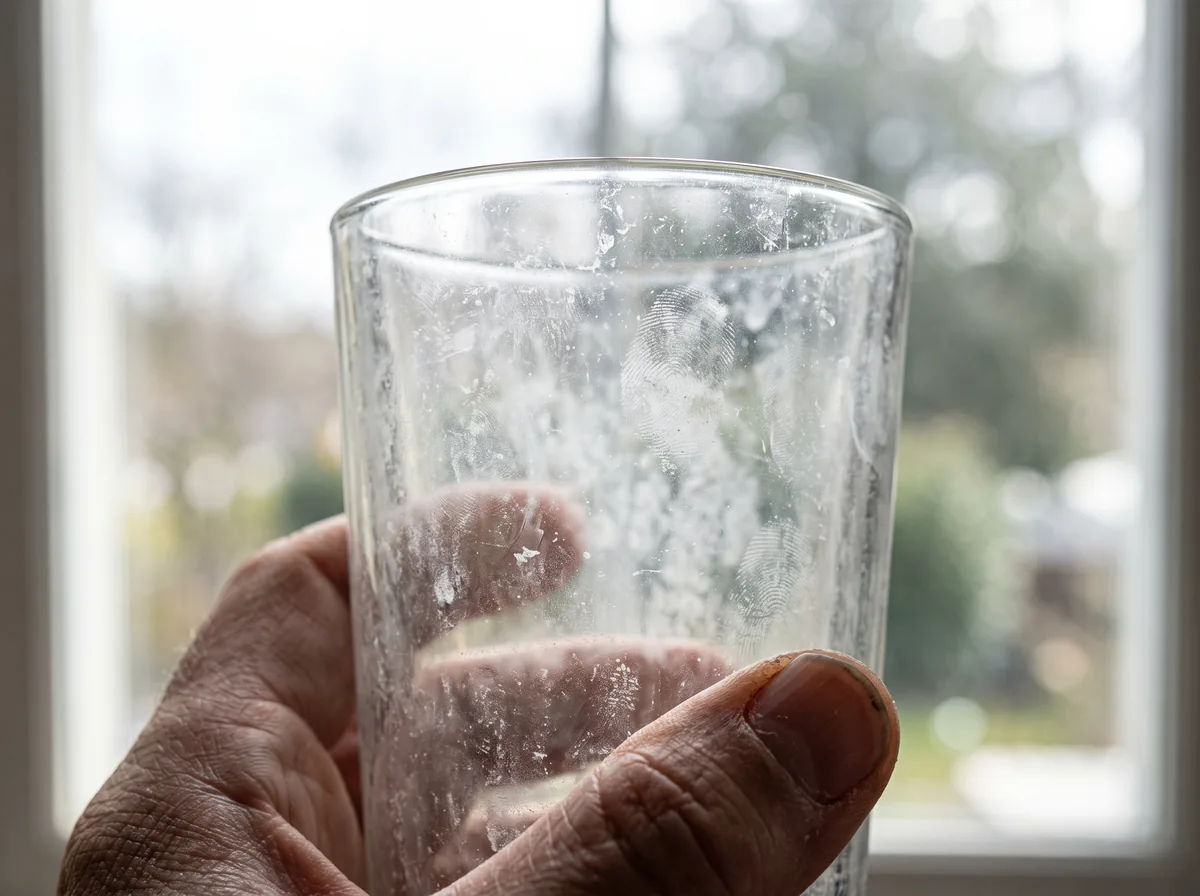
This is the step most people skip, and it matters heavily. Hard water film sits directly on top of the glass and easily comes off. Glass etching is microscopic pitting of the glass surface itself. It is physical, permanent damage, so no product or repair will ever bring the glass back to life. Before you chase a complex fix, run the simple test that tells you exactly which one you have.
The Vinegar Test
Dip a clean cloth in pure white vinegar and gently wipe a cloudy glass, or soak the glass directly in a bowl of vinegar for a few minutes. If the haze clears away and the glass turns bright again, it is hard water film, and it is entirely fixable. If the cloudiness stays exactly the same after applying the vinegar, the glass is etched, and that physical damage does not reverse. Etched glasses often also have a faint rainbow sheen in the light and feel slightly rough or frosted to the touch.
Did You Know?
Etching is usually caused by soft water combined with too much detergent and very hot water, which slowly eats right at the glass surface. In hard water areas like Montreal, true etching is far less common than plain mineral film, so most cloudy glasses here can actually be saved. That is precisely why the vinegar test is worth doing first.
How to Remove Hard Water Film From Your Glasses and Dishwasher
Disclaimer: This article is general information only. Appliances and water conditions vary. Capital Appliance Repair is not liable for outcomes from actions taken based on this content. For a dishwasher that will not clean, heat, or drain, always have it formally inspected by a certified technician.
Once the vinegar test officially confirms the film is a mineral deposit and not permanent etching, work through these steps in order. Most glasses come out crystal clear by step three.
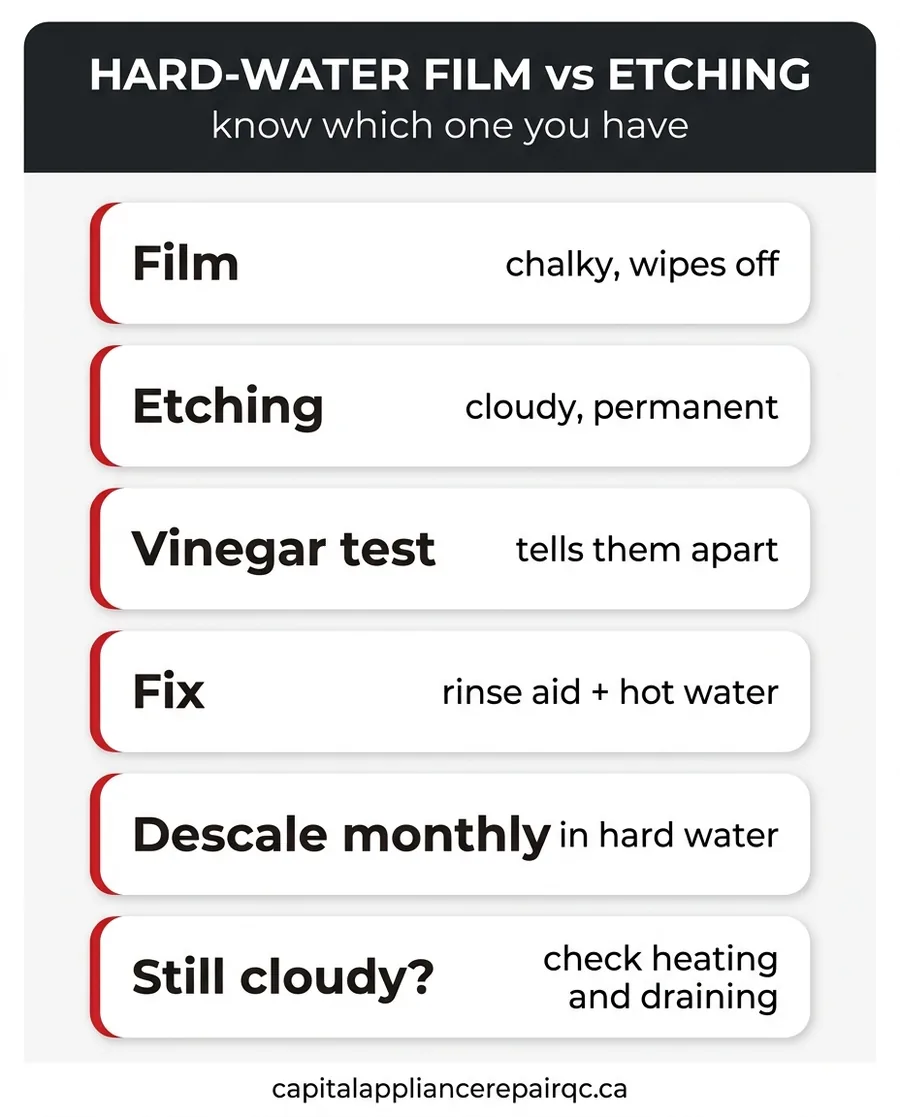
- Confirm It Is Film, Not Etching: Wipe a hazy glass with white vinegar. If it clears, keep going. If it stays cloudy, the glass is permanently etched and cannot be restored.
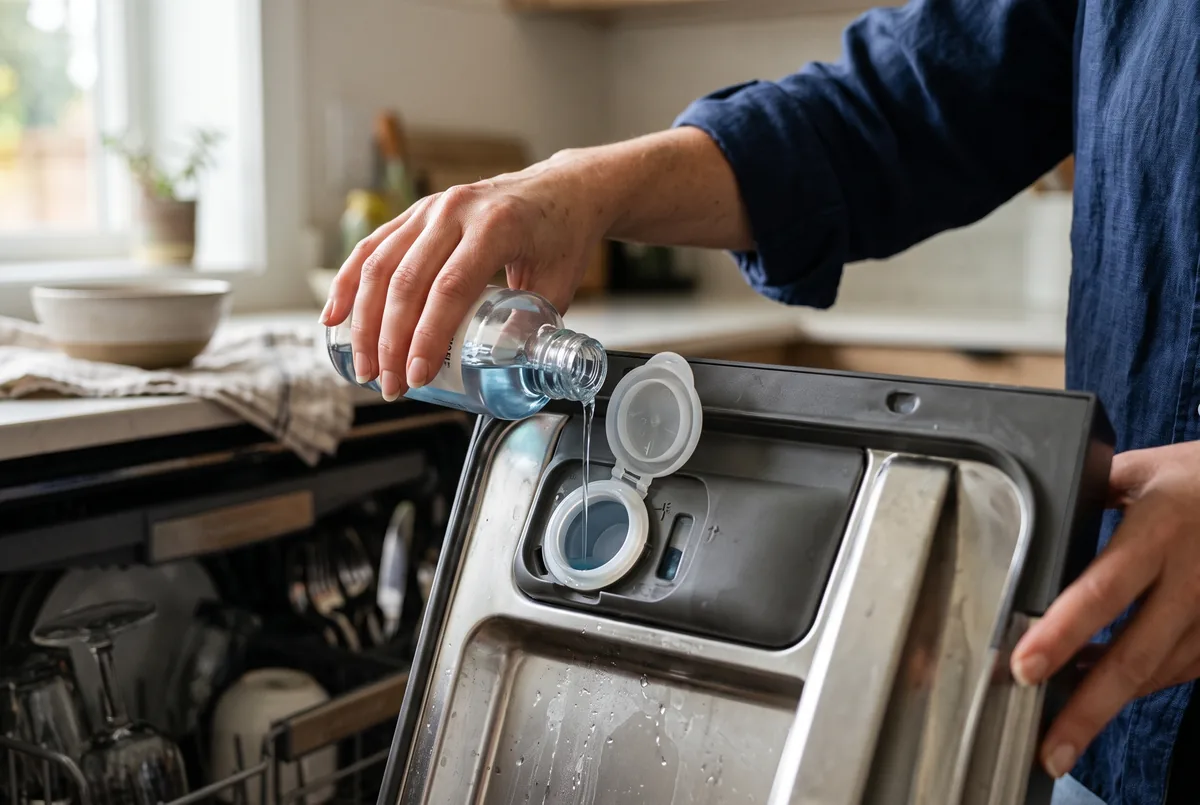
- Add or Refill Rinse Aid: Fill the rinse aid reservoir completely and set the dispenser to a higher level. This single step solves a massive share of cloudy glass complaints in hard water homes.
- Run a Hot Cycle With an Acid Descaler: Place a bowl of white vinegar on the top rack, or use a dishwasher-safe descaler or citric acid, and run the hottest empty cycle to strip mineral buildup directly from the tub and spray arms.
- Use Fresh Detergent and the Right Amount: Replace old, clumped detergent, and strictly follow the dose on the package. In hard water, you often need the full amount, not a partial scoop.
- Raise Your Water Heater to About 120°F (49°C): Hotter wash water dissolves detergent perfectly and rinses minerals away. Run the kitchen tap hot for a few seconds before starting the dishwasher so the machine fills with truly hot water.
- Descale Monthly in Hard Water: A scheduled monthly vinegar or descaler cycle keeps minerals from rebuilding on the glasses and deep inside the machine mechanics.
Pro Tip
Load glasses at a clear angle between the tines, never directly over them, and leave enough space so the spray reaches every surface. Crowded racks trap dirty water that dries into fresh film, entirely undoing the expensive rinse aid you just added.
Fixes That Stop the Film From Coming Back
Clearing the film once is incredibly easy. Keeping it gone is all about treating the water and dosing correctly every single load. These are the daily changes that hold up long term, whether you run a professional Bosch dishwasher repair unit, an older Whirlpool appliance service model, or a high-end KitchenAid dishwasher.
- Keep Rinse Aid Topped Up: Check it monthly. It is the absolute cheapest, most effective defense against hard water film.
- Use a Rinse or Detergent Booster: Citric acid-based boosters naturally neutralize hard water so your detergent can actually do its job.
- Keep the Wash Water Hot: Around 120°F (49°C) at the kitchen tap is the ideal sweet spot for most modern detergents.
- Descale on a Strict Schedule: A monthly acid cycle stops heavy buildup on the delicate heating element and the spray arms.
- Consider a Whole-Home Water Softener: For very hard water, a whole home softener successfully protects every appliance, not just the dishwasher.
People Often Ask: Is It My Dishwasher or the Water?
A completely dead or empty rinse aid dispenser is the most common single cause of cloudy glasses we find, and it costs exactly a few dollars to fix. Rule that out and refill it before you automatically assume anything is mechanically wrong with the machine. Only if fresh rinse aid, hotter water, and a proper descale cycle all fail should you treat the dishwasher itself as the problem.
When the Dishwasher Itself Is the Problem
Sometimes the hazy film is a mechanical symptom of the machine, not the water itself. If your glasses stay cloudy after fresh rinse aid, a descale cycle, and verifying hotter water, the dishwasher may not be heating or rinsing properly. Watch very closely for these signs that it needs a technician rather than just another bottle of rinse aid.
- Dishes Come Out Cool and Wet: A failed heating element means the water never gets hot enough to dissolve the detergent or dry the dishes properly.
- Standing Water in the Bottom: A clogged filter or a failing drain leaves dirty, mineral-heavy water that simply redeposits onto everything.
- Weak or No Spray at All: A blocked spray arm or a heavily worn pump simply cannot rinse the heavy minerals off the glass.
- Film on Plastic and Metal Too: When absolutely everything comes out coated, not just the glass, the machine is completely failing to rinse.
That is exactly when a professional inspection pays off. A qualified technician can meticulously test the heating element, clear the deep drain and filter, and check the vital spray arms and pump. Capital Appliance Repair proudly serves homes across Greater Montreal, providing certified Laval appliance repair as well as expert Longueuil appliance repair and rapid service in Brossard on the South Shore. You can easily view our full service area map to quickly check your city. For official manufacturer care advice, the Bosch Home Canada site is an excellent, solid independent reference on regular dishwasher use and long-term maintenance.
Download the Free Quick Guide
Save this handy guide as a PDF so you can reference the troubleshooting steps whenever you need them.
Frequently Asked Questions
What to Do Next
- Run the vinegar test on one cloudy glass to confirm the film is mineral and entirely removable, not permanent etching.
- Refill the rinse aid, dose fresh detergent, and run a hot descale cycle before you assume the machine is mechanically broken.
- Still cloudy after all that? The dishwasher may not be heating or draining properly, and that specifically needs a professional technician.
If your glasses stay filmy after fresh rinse aid, hotter water, and a descale cycle, the machine likely is not heating or rinsing the way it structurally should. Capital Appliance Repair routinely diagnoses and fixes dishwashers across Montreal and the surrounding South Shore and North Shore. Book a repair visit today and get your glasses coming out perfectly clear again.


